

Banner image

Camera suggestions (1 Viewer)

mapierce7

Senior Member
Joined
Apr 29, 2012
Messages
708
Location
Eau Claire, WI
So since it is tax seson and all, I have been throwing around the idea of buying a decent camera for some aquaria photography. I would like to keep it under $500, but I would go a little higher if it is really worth it.

I don't know much at all about cameras so bear with me. I have been looking at the Canon t2-5i series, those seem to be in my price range. I also assume I would be interested in some sort of macro lense.

Any and all suggestions are very welcome. It doesn't have to be something super crazy fantastic just something that I can get some nice looking pictures with and stop posting phone photos.

-Matt
 
Make sure to use a camera comparison site for choosing the best camera in that range (seomtehing like this http://snapsort.com/compare). For some reason Canon seems to remove features from new models sometimes so never assume that one is better than the other just because it has a higher numerical name. ;)

For a Macro lens, one of the best lenses for the money is the Tamron 90mm Macro. If you can't afford it right away, practicing with the kit lens and maybe a macro filter is just fine for getting started.
 
Check the out dpreview website and when you have the model narrowed down go to National Camera Exchange. They'll let you play with the camera in store and are fairly knowledgeable about the model differences. Personally I would go with one of the mirrorless systems if I was buying new right now. I think that is where digital photography is going to be going.
 
So looking at the mirrorless models I notice lenses are harder to come by, or a lesser selection anyway. I think the Sony a3000 seems like a good start. The Samsung nx3000 is appealing especially because of the pice tag. Thoughts?
 
Last edited:
Did you look at this? It's a nice list of the current entry level mirrorless. Dpreview did give it their best budget mirrorless designation. I do like the Sony offerings, I personally shoot with an A55. I would probably buy an a7II if money was no object. Mirrorless are still relatively new so there are a lot less lenses, but there are still a lot of good ones and you can find all the basic types.

http://www.dpreview.com/articles/49..._source=mainmenu&utm_medium=text&ref=mainmenu

In my opinion the DSLR was a great bridge from film to digital, but there is really no longer a need to have a mirror flipping up and down in a camera. It just adds bulk, complexity, and vibrations. I also find live view of what I am shooting more helpful than an optical image that does not show me what my picture is going to look like. Mirrorless are far from mature and the manufacturers are still trying to figure out exactly what will sell, but I believe they are the future standard for interchangeable lens cameras and their capabilities are already surpassing DSLRs.
 
Last edited:
Sorry for the double post.

Looking at the entry level Sony's, I would probably pick the a5000 over the a3000. It looks like a better model and has WiFi built in.
 
Check the out dpreview website and when you have the model narrowed down go to National Camera Exchange. They'll let you play with the camera in store and are fairly knowledgeable about the model differences. Personally I would go with one of the mirrorless systems if I was buying new right now. I think that is where digital photography is going to be going.

Good advice here regarding dpreview and National Camera. Both are great.

I'm a DSLR shooter (I'm quite partial to Nikon myself), and I think there are some really significant advantages to DSLR cameras of good caliber (I not sure you can get all the features I'm thinking of for $500 though). But I'm hearing some really good things about this new mirrorless camera format, including some serious DSLR shooters talking about them.

I don't know what the current lens selection is like for the mirrorless systems, and I don't know anything about whether design standards have become firmly established yet that are likely to last the way SLR standards have (e.g. the better Nikon DSLR cameras are compatible with lenses dating back many years).

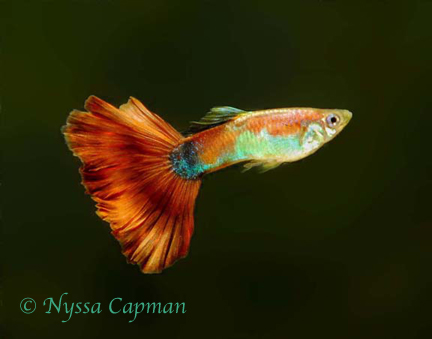
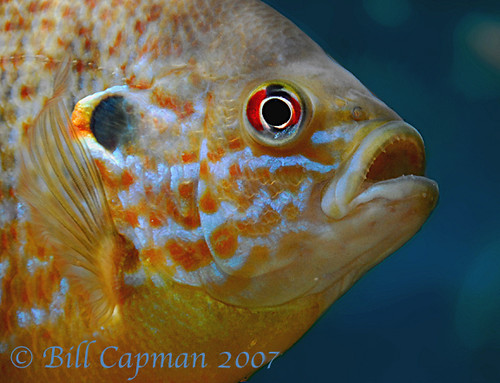
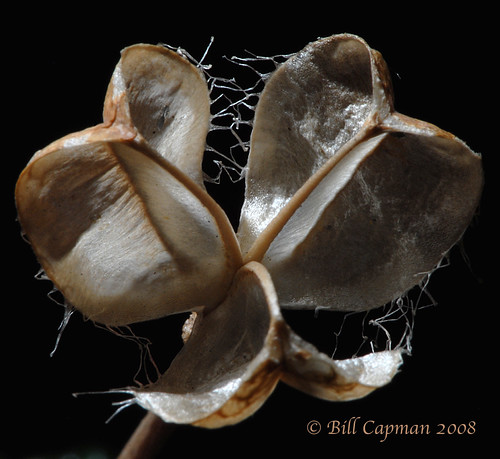
Regardless of what system you choose, one thing I think would be worth seriously considering is whether the camera is compatible with the use of external flashes. In the better systems (e.g. the better Nikon DSLR cameras are like this) one can have really sophisticated wireless control of up to two sets of wireless flashes (if you have the money to buy that many flashes), in addition to the built-in flash. I can't emphasize enough how important this can be in a lot of situations. For example, this use of an external flash is what made these photos possible:

guppy-DSC_3565small by wcap07, on Flickr

PumpkinseedSunfishcroppedReducedDSC_3628 by wcap07, on Flickr

Fritillaria meleagris pod DSC_7492 by wcap07, on Flickr

A sharp lens, and good focus, and good control of depth of field and that sort of thing (and other things too) are all really important in getting good photos. But more than anything else, what makes the biggest difference between good photos and great photos (assuming equivalent subject matter and composition of course) is lighting. I do some portrait photography for our church, for example, and people rave about my photos. There are a lot of things that go into those photos being good, but the biggest factor by far is the lighting effects I can achieve by being able to easily position flashes off the camera.

I don't know what is available for $500 in this regard, and you might not also have the money to buy an external flash just yet, but at the very least see if you can choose a camera that you can plug a flash cable into for a remote flash, even if the camera doesn't have wireless flash control capabilities.
 
Last edited:
So since it is tax seson and all, I have been throwing around the idea of buying a decent camera for some aquaria photography. I would like to keep it under $500, but I would go a little higher if it is really worth it.

I don't know much at all about cameras so bear with me. I have been looking at the Canon t2-5i series, those seem to be in my price range. I also assume I would be interested in some sort of macro lense.

Any and all suggestions are very welcome. It doesn't have to be something super crazy fantastic just something that I can get some nice looking pictures with and stop posting phone photos.

-Matt

My advice after being in the exact same situation as you less than a year ago is this:
1) Pick a brand. You're going to get stuck with the manufacturer of your camera body (unless you can sell it all off one day) and what they, or third parties out there, make for it. If you want a lot of options, go Cannon or Nikon.

2) Find out what you need, not want. Trust me, you don't necessarily need all the extra features the manufacturers are putting into bodies when you're starting out. Forget things like Wifi and GPS. They just aren't worth the extra money, imo, and will just use up your battery quicker.

3) Consider buying factory refurbished and a separate lens. Can save quite a bit on the body and you get to pick exactly the one lens you really want to use.

4) Take a class from REI Outdoor School or some clubs around town to learn to use your camera and figure out how to take better quality and more appealing photos. Simple things like a histogram and the rule of thirds are even things you could look up online.

5) Read "Understanding Exposure" by Bryan Peterson. They have a few copies in the Hennepin County library system.

And lastly, if you have access to either, attempt to learn Photoshop and Light Room. Half of the really awesome images out there have been tweaked in some way using post-processing programs. It's like using the darkroom materials and different developing techniques back in film days.

Good luck!
 
Yes, I did check out the PD review site, thank you for the suggestion. That is where I came up with my first couple ideas. They seem to be fond of the new fuji x models.

I am alright with the idea that this could be more of an "entry level" camera, when it comes to the fancy (not point and shoot) models. With that being said I don't suspect to become a full on photography buff, but you never know I guess. I am not opposed to the idea of upgrading a few years down the road. That may not be the greatest of ideas but I don't need to be buying way above and beyond my current ambitions.

Without going to macro lenses, what kind of pictures can be expected with many of these "kit" lenses. Many of them I see with 20-50mm or somwehre in that range.

-Matt
 
Regarding software: That indeed is an important aspect of getting good photographs in many cases. We have both Photoshop and Lightroom. My daughter uses Photoshop for a variety of things, and I do to on occasion, but for most normal image processing that doesn't require chopping out bits and moving them around and such, Lightroom is really the way to go. It is an awesome program, and the main thing I use.

Software of course adds to the cost, with an already limited starting budget. This is not essential initially (and increasingly there are reasonably viable online substitutes for some of the functions in these programs) but I would definitely think about getting Lightroom if you find yourself getting at all serious about this. Aperture is another option, but when I compared them side by side a number of years back I thought Lightroom had some significant advantages.

One more thing: The sort of photography you are interested in doing - aquarium photography - can be a bit more demanding than, say, taking photos of the birthday party or backyard barbecue. There will be situations where you will really want to have manual control over aperture and/or shutter speed, and focus too. One of the things that serious photographers like about some of the higher end DSLR cameras is that these cameras are designed to make this sort of manual control very easy. In contrast, some lower end cameras (many of them in fact) are designed to make more decisions for you - this can be nice in some situations, and can be VERY nice for folks who just want to point and shoot, but when doing closeups, or situations with challenging lighting, or situations where you want to stop motion, etc., manual control can be invaluable. Some of the lower end cameras are much better than others in terms of ease of manual control (e.g. in the worst cases one has to go into menus to do any manual settings, and this in my opinion can be fairly horrid).

I'm not at all up to date on the options in this general price range, but I know that folks on some of the Flickr DSLR forums used to talk about some Canon point and shoots, for example, which were very comfortable for someone accustomed to the great manual control features of a good DSLR. I know nothing much about the particulars, but I'd bet some of these new mirrorless, exchangeable lens cameras have controls set up pretty nicely.
 
Last edited:
Yes, I did check out the PD review site, thank you for the suggestion. That is where I came up with my first couple ideas. They seem to be fond of the new fuji x models.

I am alright with the idea that this could be more of an "entry level" camera, when it comes to the fancy (not point and shoot) models. With that being said I don't suspect to become a full on photography buff, but you never know I guess. I am not opposed to the idea of upgrading a few years down the road. That may not be the greatest of ideas but I don't need to be buying way above and beyond my current ambitions.

Without going to macro lenses, what kind of pictures can be expected with many of these "kit" lenses. Many of them I see with 20-50mm or somwehre in that range.

-Matt
The kit lens usually is not the best lens out there, but is very good for starting out. It is usually a good idea to shoot with that for awhile first. Then you have a better idea what you want/need in lenses. The lenses are what are going to follow you. You'll probably change bodies a few times, but if you stick with the same brand you'll keep the lenses a lot longer.
 
I've been looking at cameras recently as well. I think I am going to go with a Nikon D5300. Camera + Lens bundle is about $800 on amazon, $950 for a bundle with a different lens.
You can get a new one on eBay for around $600 with an option to buy a 3 year accidental damage + warranty for like $125.

The dslr & mirrorless cameras from Nikon, Canon, Sony, and any of the other few major brands are all going to take great photos. Some brands have many more lenses available. Or have certain features available at lower price points.
Mirrorless vs dslr is another topic to decide on before trying to determine which specific camera to buy.

If you aren't set on a brand for any reason, one of your best options is to go play with a few cameras at a Best Buy or some other store. And try to figure out if there is an interface you prefer.
Or at least make sure you don't really dislike using/navigating any of them. Then if after determining which interface/button layout you prefer, you are set on a brand. Then you can simply choose a camera at the price/feature point you want.
 
I am not sure the difference as I am not familiar with that system's lens designations, but I would assume the compact one would be smaller sized. The numbers are focal length of the lens. The low number is how wide the lens is, and the higher number is the zoom end of the range. There is not too much difference in the ranges you list. Both would be considered "walking around zooms". They have a nice range for everyday photography. If you see a lens with only one number it is called a prime lens. These are usually sharper and take better pictures, but you have no zoom. I have a super zoom 18-250 lens and a 35 prime. Next lens I get will be a 18-50.
 
Without going to macro lenses, what kind of pictures can be expected with many of these "kit" lenses. Many of them I see with 20-50mm or somwehre in that range.

-Matt

i would strongly recommend going to a National Camera store and trying out some cameras. Be sure you have some coins in your pocket so you have a small subject of familiar size with small details on it (a surrogate for, say, a small coral) and see what sorts of photos you can get of a coin with different cameras and lenses.

Tell the salesperson what sorts of photography you want to be doing, and I would also ask about ease of manual control and whether there are any external flash options should you decide to go that route at some point.

I should add here that in your situation a good quality point and shoot might really suit you just fine (and I think some of the better ones are even set up to allow you to plug in or otherwise control external flashes should you want to go that route at some point - this can be VERY useful for closeup photography sometimes). Some of the point and shoot cameras do closeup photography really well without requiring the expense of purchasing a separate macro lens.

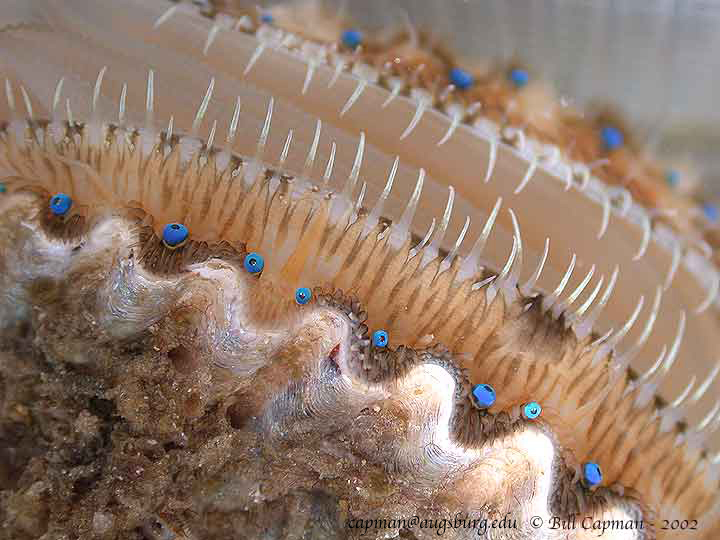
As one example, I took this photo with a 2 or 3 (I forget) megapixel Nikon Coolpix point and shoot something like 10 years ago (and this photo has been used in multiple publications, on the cover of a scientific journal, in several museum displays, etc):

scallop-eyes-wide by wcap07, on Flickr

This photo was taken in direct sunlight (coming sort of from the left side) incidentally. That lighting was really instrumental in this photo coming out well. The only really good substitute for the sunlight in this case, I think, would have been a flash off the camera (I think some of the better point and shoots will give you this option, as well as being designed to make manual control of the camera pretty easy when desired). You won't get a photo to look quite like this with a flash on the camera.
 
Last edited:
I will be going to the meeting today until about 2. So if you're going and want to bring it so I can take a look that would be cool.

-Matt
 
Last edited by a moderator:
I will be going to the meeting today until about 2. So if you're going and want to bring it so I can take a look that would be cool.

-Matt

I am not able to make the meeting today, I wish I could.
 

Users who are viewing this thread

Back
Top