Glad the wet test went well!

Navigation
Install the app
How to install the app on iOS
Follow along with the video below to see how to install our site as a web app on your home screen.

Note: This feature currently requires accessing the site using the built-in Safari browser.
More options

You are using an out of date browser. It may not display this or other websites correctly.
You should upgrade or use an alternative browser.
You should upgrade or use an alternative browser.
cypho's 36" DIY reef (1 Viewer)
- Thread starter cypho
- Start date
The DIY controller is up and running now.
So far, the only thing I have programmed are the lights. The lights are synchronized in real time with sunset/sunrise in Hawaii. At the moment that works out to be roughly noon-midnight in Central Daylight time. The sunrise/sunset is calculations are performed with the pyephem library.
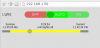
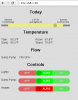
Here is a screenshot of my web interface. On/Off is pretty obvious, the background color of auto changes depending on if auto wants the lights on or off. The sunrise/sunset bar shows you when the lights were/will-be turned on/off (assuming the lights are on auto).
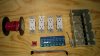
Each bank of plugs is made with: a 4-gang outlet box, an 8-channel relay, 4 standard outlets, and 1 tangled birdsnest of wire.
The raspberry pi does not have enough GPIO pins to hook the relays directly to the pi, so the 2 relays are connected to this i2c GPIO expansion board.
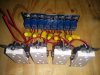
I have 2 banks of 8 plugs. All 16 plugs can be individually be turned off/on by the controller. I can set the hardware default state of each outlet individually but to avoid confusion I have all outlets in each bank setup the same. One bank defaults off, the other defaults on.
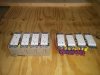
The top board is the raspberry pi, bottom board has 2 GPIO expansions (the 2nd is not currently used, just there for future additions) and a clock ( in case the internet is out when the pi boots ).
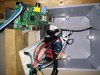
Final pic shows the whole contraption.
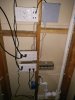
The very top electrical box contains: 3 physical switches, one switch for each power bank + one extra, USB power for the PI and anything else that needs USB power, and a GCFI protection box. There was an extra space so I stuck in a "dumb" outlet to fill the void.
You can also see in the bottom right corner where the sump overflows into the sewer.
So far, the only thing I have programmed are the lights. The lights are synchronized in real time with sunset/sunrise in Hawaii. At the moment that works out to be roughly noon-midnight in Central Daylight time. The sunrise/sunset is calculations are performed with the pyephem library.
Here is a screenshot of my web interface. On/Off is pretty obvious, the background color of auto changes depending on if auto wants the lights on or off. The sunrise/sunset bar shows you when the lights were/will-be turned on/off (assuming the lights are on auto).
Each bank of plugs is made with: a 4-gang outlet box, an 8-channel relay, 4 standard outlets, and 1 tangled birdsnest of wire.
The raspberry pi does not have enough GPIO pins to hook the relays directly to the pi, so the 2 relays are connected to this i2c GPIO expansion board.
I have 2 banks of 8 plugs. All 16 plugs can be individually be turned off/on by the controller. I can set the hardware default state of each outlet individually but to avoid confusion I have all outlets in each bank setup the same. One bank defaults off, the other defaults on.
The top board is the raspberry pi, bottom board has 2 GPIO expansions (the 2nd is not currently used, just there for future additions) and a clock ( in case the internet is out when the pi boots ).
Final pic shows the whole contraption.
The very top electrical box contains: 3 physical switches, one switch for each power bank + one extra, USB power for the PI and anything else that needs USB power, and a GCFI protection box. There was an extra space so I stuck in a "dumb" outlet to fill the void.
You can also see in the bottom right corner where the sump overflows into the sewer.
Last edited:
I built a lid for the overflow box. I love the way it looks, and it has been very effective at keeping the livestock out of the overflow. Before lid every morning I found someone in the overflow, since the lid no one has gone over.
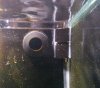
I also added a cage to hide and hold in place the temperature probe. It stands out in this closeup, but in real life, from the front of the tank it is almost completely invisible. The bulkhead is significantly more noticeable than probe/cage.
Finally, I have made a bit more progress on the controller.
Temperature
Temperature probes measure tank, sump, stand, & room temperature. I used these temperature probes. They are disturbingly precise. When I placed all of the probes in the tank they agreed with each other to around 0.005 F. Still, I would not recommend these particular probes. It has only been 3 days, and both submerged probes are already showing signs of rust. The not-so-stainless steel will either need to have some sort of waterproof coating added or I will need to swap them out for something else. At least they were not expensive.
Heater control is primarily based off of the tank temperature unless the sump pump is turned off. There are sanity checks comparing the tank temperature to sump and room temperature. In the event of extreme high/low temperature it will force the lights off/on.
Sump Pump waterflow sensor
I'm using this water flow sensor on the sump pump. The default calibration (the equation provided in the amazon description) was off by almost a factor of 10 but it was easy to calibrate. I calibrated by timing how long it takes to fill up a salt bucket and then weighing the bucket to determine how much water the bucket was actually holding. I repeated calibration test several times at different flow rates, the accuracy after calibration appears to be around 98%.
At the moment, I am not using the info for anything other than satisfying curiosity. Still, the water-flow sensor is my favorite feature so far. Seeing the real-time flow rate is a lot of fun, especially with a controllable DC sump pump.
The pump is a Jebao DC-12000. Eventually the controller will be able to control the pump speed. For now I'm just using the stock speed controller which has 6 settings. The flow rate at each setting is:
1. 380 GPH
2. 485 GPH
3. 585 GPH
4. 665 GPH
5. 745 GPH
6. 815 GPH
The overflow can easily handle the max flow, and is only unacceptably noisy at setting #1 (loud gurgling). I have been using setting 2 at night and 4 or 5 during the day.
I also added a cage to hide and hold in place the temperature probe. It stands out in this closeup, but in real life, from the front of the tank it is almost completely invisible. The bulkhead is significantly more noticeable than probe/cage.
Finally, I have made a bit more progress on the controller.
Temperature
Temperature probes measure tank, sump, stand, & room temperature. I used these temperature probes. They are disturbingly precise. When I placed all of the probes in the tank they agreed with each other to around 0.005 F. Still, I would not recommend these particular probes. It has only been 3 days, and both submerged probes are already showing signs of rust. The not-so-stainless steel will either need to have some sort of waterproof coating added or I will need to swap them out for something else. At least they were not expensive.
Heater control is primarily based off of the tank temperature unless the sump pump is turned off. There are sanity checks comparing the tank temperature to sump and room temperature. In the event of extreme high/low temperature it will force the lights off/on.
Sump Pump waterflow sensor
I'm using this water flow sensor on the sump pump. The default calibration (the equation provided in the amazon description) was off by almost a factor of 10 but it was easy to calibrate. I calibrated by timing how long it takes to fill up a salt bucket and then weighing the bucket to determine how much water the bucket was actually holding. I repeated calibration test several times at different flow rates, the accuracy after calibration appears to be around 98%.
At the moment, I am not using the info for anything other than satisfying curiosity. Still, the water-flow sensor is my favorite feature so far. Seeing the real-time flow rate is a lot of fun, especially with a controllable DC sump pump.
The pump is a Jebao DC-12000. Eventually the controller will be able to control the pump speed. For now I'm just using the stock speed controller which has 6 settings. The flow rate at each setting is:
1. 380 GPH
2. 485 GPH
3. 585 GPH
4. 665 GPH
5. 745 GPH
6. 815 GPH
The overflow can easily handle the max flow, and is only unacceptably noisy at setting #1 (loud gurgling). I have been using setting 2 at night and 4 or 5 during the day.
Last edited:
For better waterproofing on the temp probe, try putting some heat shrink on the shaft and stretching a screw thread protector over the top. That's basically all Neptune does with theirs.
For better waterproofing on the temp probe, try putting some heat shrink on the shaft and stretching a screw thread protector over the top. That's basically all Neptune does with theirs.
Great tip, I will try that.
Thanks
For better waterproofing on the temp probe, try putting some heat shrink on the shaft and stretching a screw thread protector over the top. That's basically all Neptune does with theirs.
That did the trick, no more rusty temp probes.
Mrs Mcculloch says thanks.

Last edited:
Good to hear!
(nice pic, by the way)
(nice pic, by the way)
Dalailammy
Amphipod First Class
I like the resurrection and use of the halides. Looks good.
Can u post a pic of just the overflow lid? That is hella cool looking and really floating my boat
There are 4 small pieces of acrylic glued to each corner of the overflow. The lid is a rectangular piece of acrylic slightly smaller than the top of the overflow.
Auto top off is now mostly functional.
Part list:
Float switch: to tell the controller when the water is low.
Solenoid valve: so the controller can turn on/off the flow of RO water.
Float valve: to cut off the water in case of failure in the switch/solenoid/controller.
Everything works, but when I cut power to the solenoid, it creates an electrical surge strong enough to cause the halides to reboot. I could avoid the problem by only topping off at night, but I worry that the surges will eventually damage something.
Until I figure out how to suppress the inductive surge from the solenoid, I am bypassing the solenoid and letting the float valve do the heavy lifting.
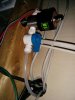
Float Switch, Float Valve, and emergency overflow drain.
Solenoid Valve
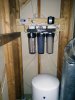
RODI water filter and 14 gallon storage tank. DI cansiter is empty for now. I'll eventually add DI resin, but for now RO is good enough.
Part list:
Float switch: to tell the controller when the water is low.
Solenoid valve: so the controller can turn on/off the flow of RO water.
Float valve: to cut off the water in case of failure in the switch/solenoid/controller.
Everything works, but when I cut power to the solenoid, it creates an electrical surge strong enough to cause the halides to reboot. I could avoid the problem by only topping off at night, but I worry that the surges will eventually damage something.
Until I figure out how to suppress the inductive surge from the solenoid, I am bypassing the solenoid and letting the float valve do the heavy lifting.
Float Switch, Float Valve, and emergency overflow drain.
Solenoid Valve
RODI water filter and 14 gallon storage tank. DI cansiter is empty for now. I'll eventually add DI resin, but for now RO is good enough.
Last edited:
- Joined
- Feb 24, 2013
- Messages
- 2
pretty cool build!
Today's Project: sock sediment filter.
Water from the durso drain enters the first chamber where a few inches of water muffle the bubbles and splashing from the durso. Water overflows into the second chamber that holds the filter sock. When the sock clogs, water will overflow into the 3rd chamber which will have a 1.5" bulkhead that drains back into the sump.
I will also probably add a lid to minimize noise and salt creep.
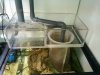
Water from the durso drain enters the first chamber where a few inches of water muffle the bubbles and splashing from the durso. Water overflows into the second chamber that holds the filter sock. When the sock clogs, water will overflow into the 3rd chamber which will have a 1.5" bulkhead that drains back into the sump.
I will also probably add a lid to minimize noise and salt creep.

Add a float switch in chamber 2 of the filter sock box. Then you can be notified when the sock is clogged 
Add a float switch in chamber 2 of the filter sock box. Then you can be notified when the sock is clogged
Great Idea. I'll be ordering another float switch very soon.
Proof that I don't have any sort of master-plan. Major renovations to the filter sock box already - instead of using chamber 1 as a landing bay for the overflow, I converted it into an algae turf scrubber.
It was a fun and very economical project. The only change to the base is it's position above the sump (rotated 180). The ATS enclosure fits in/on the first chamber that used to be the landing bay from the overflow. Other than the water flow sensor and the plastic canvas, all of the materials were dug out of my spare parts bin. Eventually I want to replace the pump and the lights with something newer and more power efficient, but for now it is driven by a mag 7 pump and is lit by a single 250W MH bulb.
The screen is 6" long and 13.5" tall. Dimensions determined solely by what fit in the available space. I hope that ends up being a reasonable size.
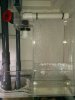
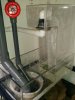
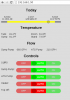
It was a fun and very economical project. The only change to the base is it's position above the sump (rotated 180). The ATS enclosure fits in/on the first chamber that used to be the landing bay from the overflow. Other than the water flow sensor and the plastic canvas, all of the materials were dug out of my spare parts bin. Eventually I want to replace the pump and the lights with something newer and more power efficient, but for now it is driven by a mag 7 pump and is lit by a single 250W MH bulb.
The screen is 6" long and 13.5" tall. Dimensions determined solely by what fit in the available space. I hope that ends up being a reasonable size.
Last edited:
I added red lion R-C Snubber to the solenoid valve and that seems to have done the trick. I don't know how actually verify that the surge is completely gone, but the lights don't shut down when I cut power to the solenoid so I am calling it fixed. ATO is now using the float switch + solenoid as primary control with float valve as a backup.
Auto top off is now mostly functional.
Everything works, but when I cut power to the solenoid, it creates an electrical surge strong enough to cause the halides to reboot. I could avoid the problem by only topping off at night, but I worry that the surges will eventually damage something.
Until I figure out how to suppress the inductive surge from the solenoid, I am bypassing the solenoid and letting the float valve do the heavy lifting.
I found a few nice things at the frag swap.
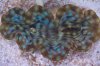

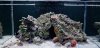
And things are finally looking good enough for a full tank shot.
A few more close ups.



And things are finally looking good enough for a full tank shot.
A few more close ups.
Last edited:
instead of using the mag 7 to run your ats you could run a manifold off of your dc12,000 and plumb that over. you could controle it with one of these
http://www.plastomatic.com/ebv.html
they cost a bit but you seem handy and it wouldnt be hard to make one!
http://www.plastomatic.com/ebv.html
they cost a bit but you seem handy and it wouldnt be hard to make one!

mvhockey
Senior Member
Just want to say this is a very impressive build thread. Awesome job!
Users who are viewing this thread
Total: 2 (members: 0, guests: 2)