



MiniWaters
Senior Member
In honor of the talk I'll be giving at the Speaker Event this weekend, I thought a bit of a teaser is in order.
Unless I talk BLAZINGLY FAST, I'll probably only get to hit on two of the three subtopics...Natural Biogeographic Diversity in Clownfishes, Genetic Mutations in Clownfishes, and/or Clownfish Hybrids. No two species, Amphiprion ocellaris and A. percula, are more bred and have more variation going for them these days.
Biogeographic Variations
We tend of think of "Ocellaris" clownfish as all being the same...but most of us are already aware of the normal "Nemo", and then the "Black Ocellaris". Current taxonomy considers both to be the "same species" but the reality on the ground (and in the water) isn't so clear. It's for this reason that you'll find me offering both:
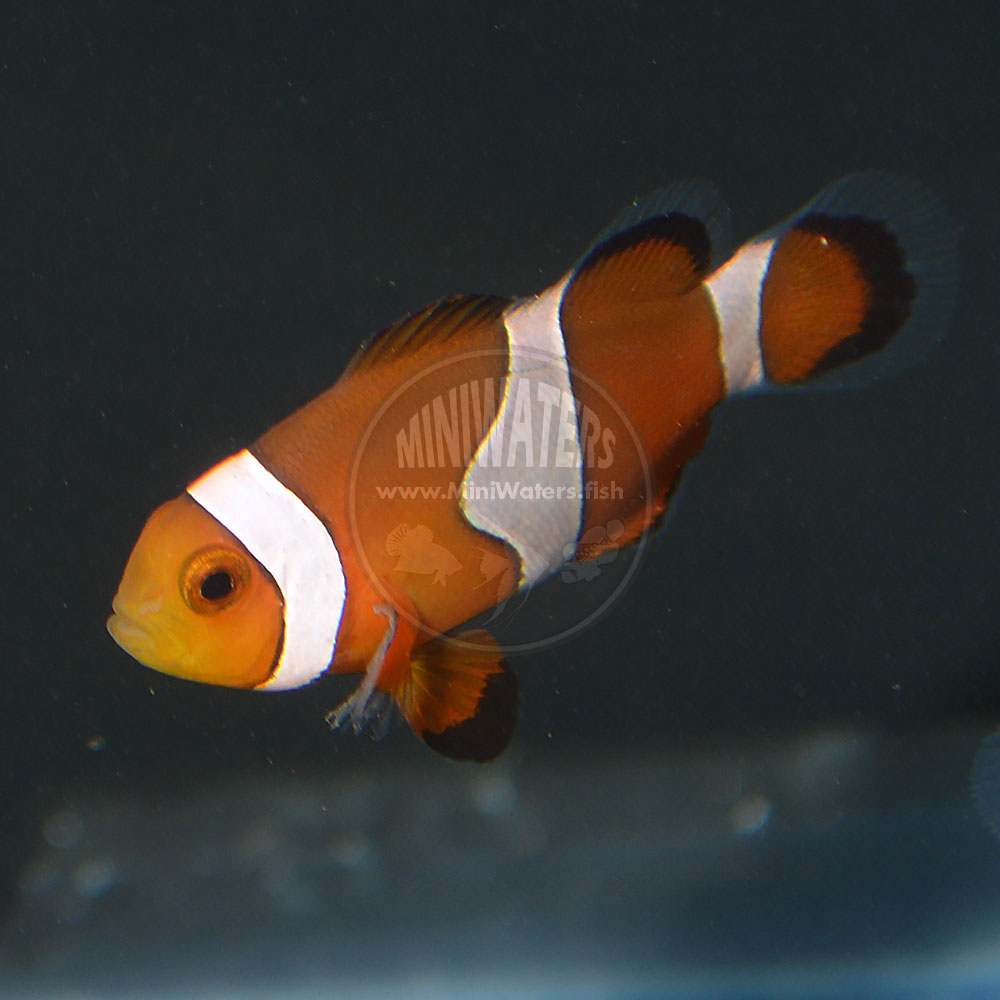
Amphiprion ocellaris - the regular old Orange Ocellaris Clownfish
- AND -
Amphiprion sp. Darwin "Black" - pure lines of the "Black Ocellaris" that haven't been contaminated with hybridization along the way. http://www.miniwaters.fish/product/amphiprion-sp-darwin-black-clownfish-true-black-ocellaris/

These days, even the basic "wild type" Ocellaris, the fish with 3 stripes, comes in more than one form. People might think I'm crazy when I note:
NEW STRAINS - Selective Breeding at Play
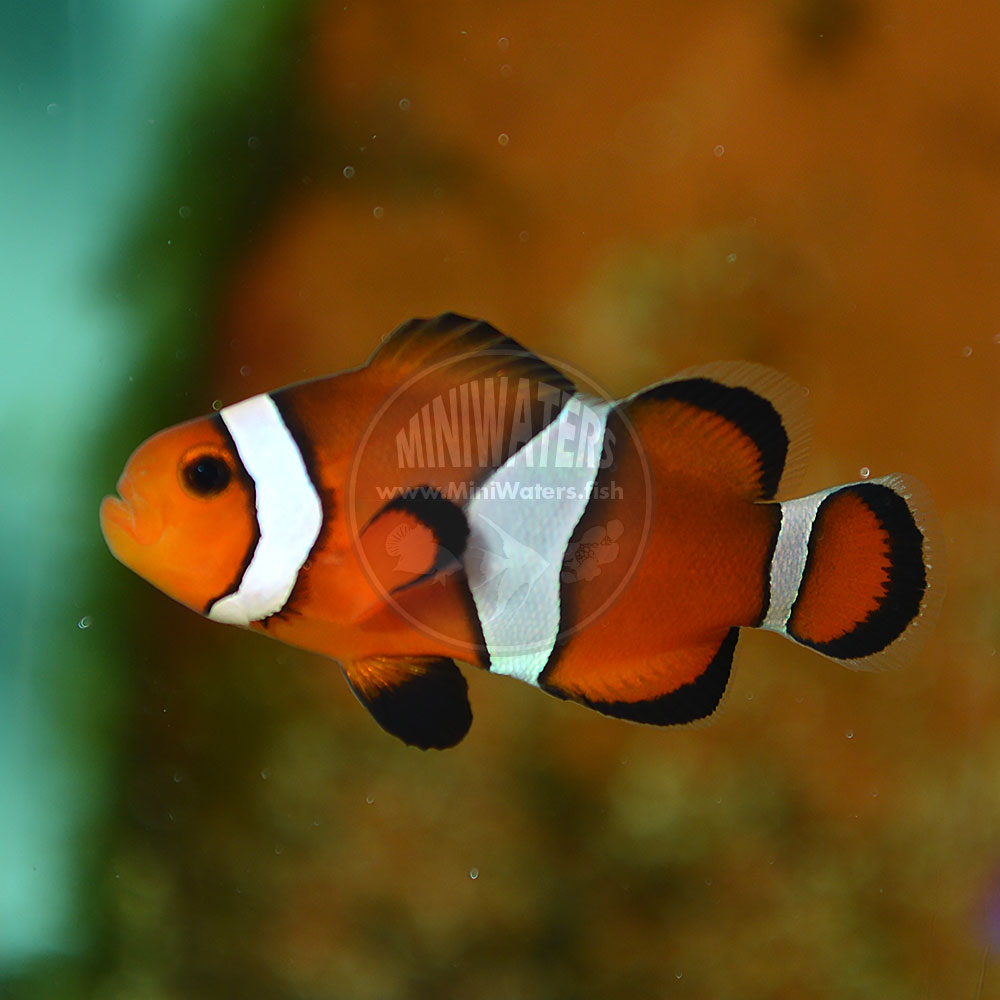
Amphiprion ocellaris "Fancy" - a line bred strain which has heavier black margins and can develop additional black coloration with age (and is not a hybrid) - http://www.miniwaters.fish/product/amphiprion-ocellaris-fancy-clownfish/
or
Amphiprion ocellaris "Blaze Orange" - which even I thought was baloney... http://www.miniwaters.fish/product/amphiprion-ocellaris-blaze-orange-clownfish/

Until I shot this photo of the wild-type, and the variants, all side-by-side!

Toss on genetics, and the field opens up further!
Genetic Mutations!
Then again, there are now genes that take away the stripes of clownfish (not to be confused with misbarring, which is environmentally-created). It seems apparent that "naked" genes arose independently in both A. ocellaris and A. sp. "Darwin", resulting in fishes like these:
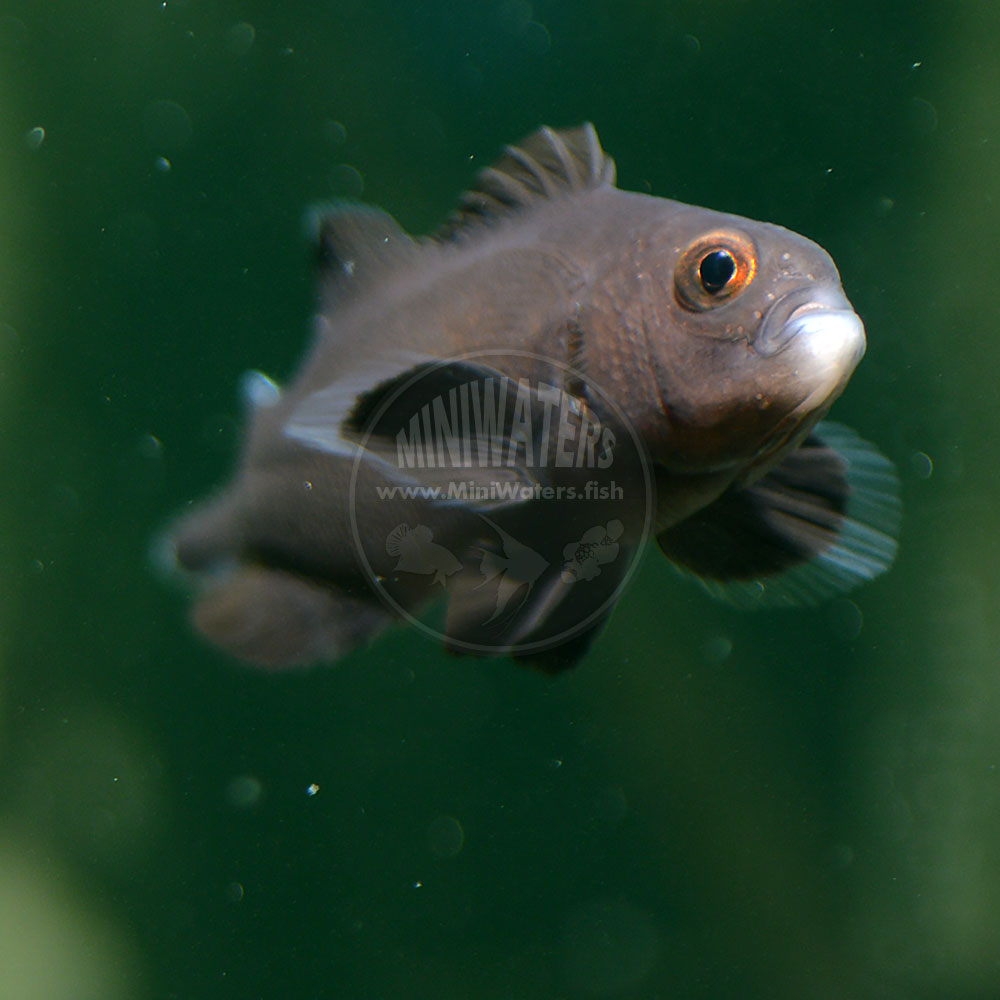
Amphiprion sp. Darwin "Midnight" - where all the stripes have vanished, only leaving behind the body coloration - http://www.miniwaters.fish/product/amphiprion-sp-darwin-midnight-black-ocellaris-clownfish/
AND
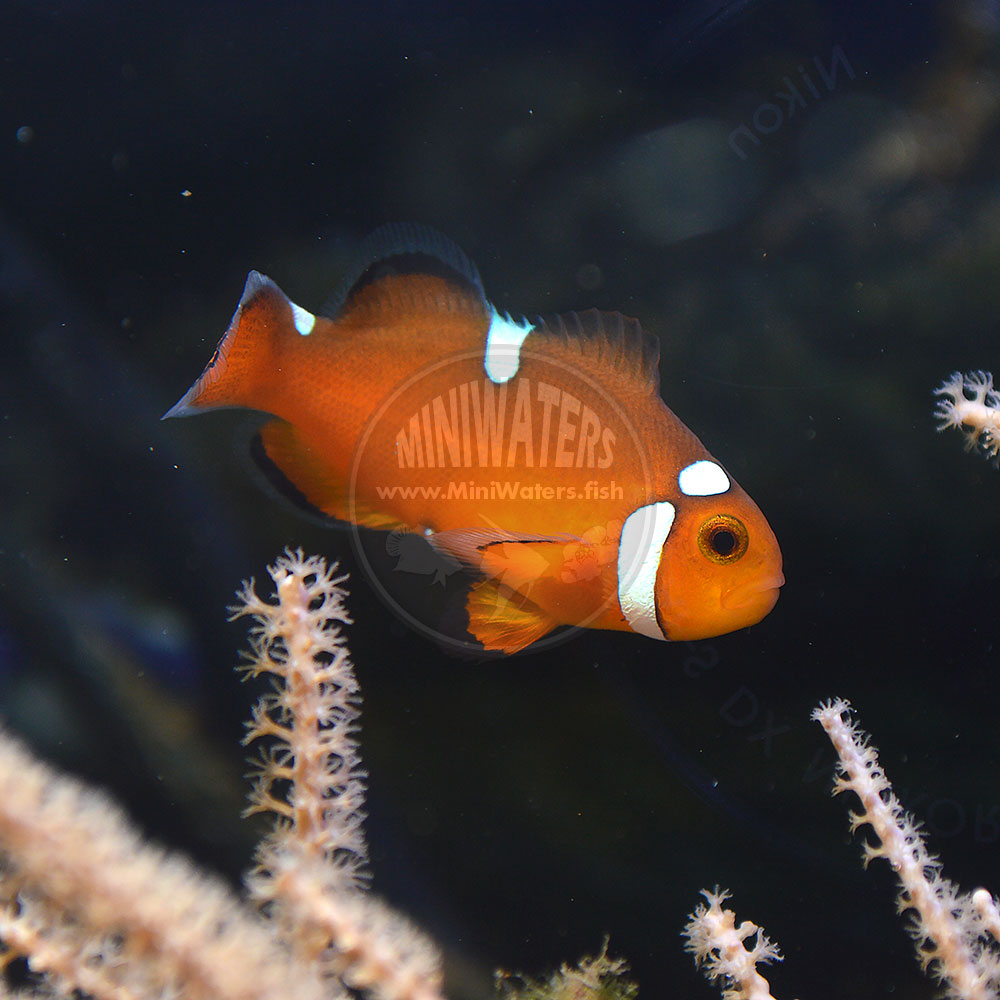
Amphiprion ocellaris "Nearly Naked" - not all fish with the naked gene lose 100% of their stripping, resulting in various domino, checkspot, and extreme misbar variations. http://www.miniwaters.fish/product/amphiprion-ocellaris-nearly-naked/
Of course, this just scratches the surface. The first genetic mutation found in A. ocellaris was probably "Snowflake...and since that time it has been refined and chased down to create some amazingly impressive fishes, like these:
Amphiprion ocellaris "Snowflake" Booyah's Buckshot® - and believe it or not, these are still pure A. ocellaris, with dark margins, and black that can develop over time, not to mention incredibly detailed patterning and spotting beyond the classic appearance of the "Snowflake" gene (a dominant gene that alters striping). - http://www.miniwaters.fish/product/amphiprion-ocellaris-snowflake-booyahs-buckshot/

Then there's another gene out there that causes more striping...the gene we now call the Davinci gene. In a single-dose, heterozygous state, we get:
Amphiprion ocellaris "Fancy White / DaVinci / Gladiator" - yes, multiple names for the same thing, and they vary from very simple fish (like the one shown below) to very extreme patterning. http://www.miniwaters.fish/product/amphiprion-ocellaris-fancy-white-clownfish-just-barely-grade/

Add in another copy of the gene, and you get:
Amphiprion ocellaris "Wyoming White" - and even now in these we have some variation, where certain fish develop "ear spots"! http://www.miniwaters.fish/product/amphiprion-ocellaris-wyoming-white-clownfish/
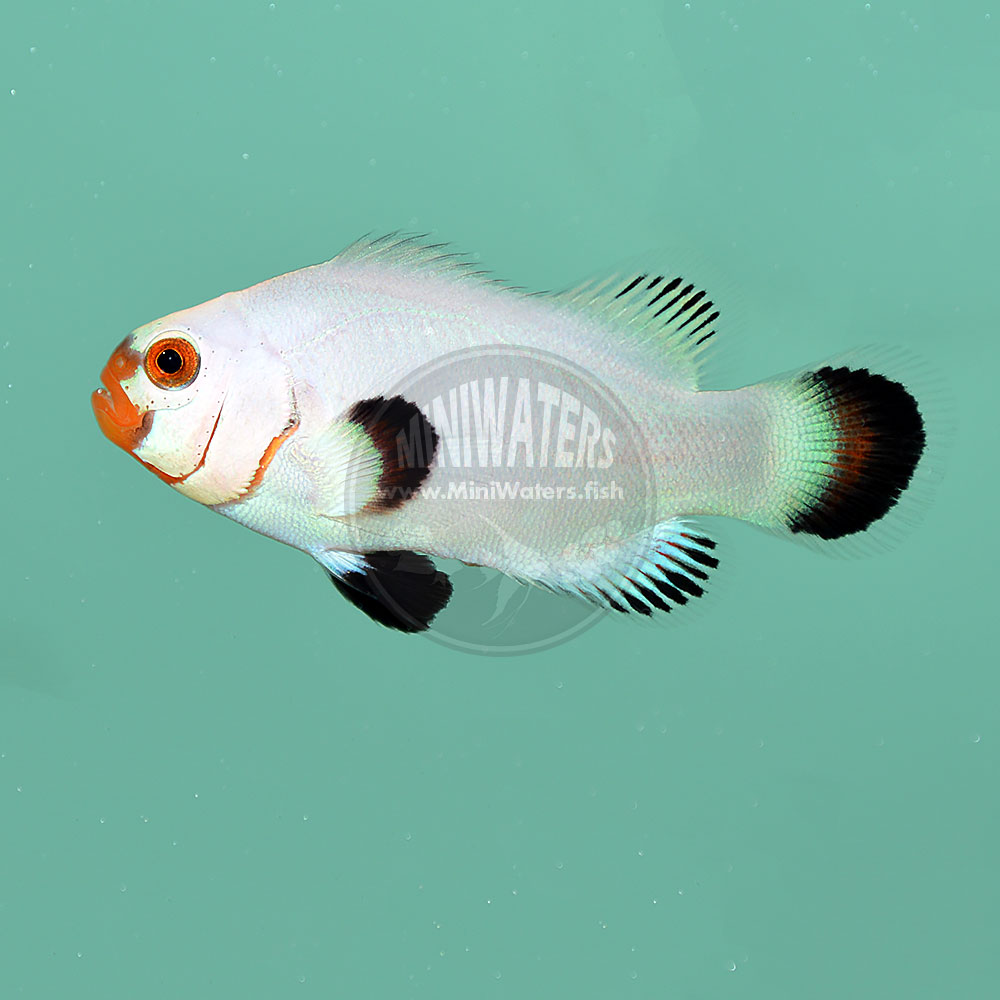
Can a fish have more than one mutant gene? Of course it can!
Multi-Gene Fish!
Amphiprion ocellaris "Frostbite" - coming in various grades from "Flurry" and "Chilled" to the more heavily patterned "Frozen" and my personal favorite, the "Subzero" - http://www.miniwaters.fish/product/amphiprion-ocellaris-frostbite-clownfish-subzero-grade/

Heck, I even complained that they sent me this "Subzero" one because it's so nice I can't bring myself to sell it!

Into the Unknown
And then there's all the new stuff we don't even understand, like:
Amphiprion ocellaris "Smudgy" - yes, we get these fish with weird smudgelike extra patterning on them that doesn't seem directly tied to a known gene. Can this trait be added into others to create something else that's new? You could be the one to answer that question! - http://www.miniwaters.fish/product/amphiprion-ocellaris-fancy-white-smudgy-ocellaris-clownfish/

Plus, there's more genetic variations I haven't shown here....and I haven't even touched on the HYBRIDS yet!
LIKE WHAT YOU'RE SEEING?
Then be sure to come to the Speaker Event this weekend...http://www.tcmas.org/v4/forums/calendar.php?do=getinfo&day=2016-2-27&e=254&c=1
...where I will do my very best to completely reshape your understanding of clownfishes.
And yes, most all of the fish shown here are available for sale on our website, www.MiniWaters.fish, and can be delivered for free to the event, wholesale and retail customers alike, this weekend!
Unless I talk BLAZINGLY FAST, I'll probably only get to hit on two of the three subtopics...Natural Biogeographic Diversity in Clownfishes, Genetic Mutations in Clownfishes, and/or Clownfish Hybrids. No two species, Amphiprion ocellaris and A. percula, are more bred and have more variation going for them these days.
Biogeographic Variations
We tend of think of "Ocellaris" clownfish as all being the same...but most of us are already aware of the normal "Nemo", and then the "Black Ocellaris". Current taxonomy considers both to be the "same species" but the reality on the ground (and in the water) isn't so clear. It's for this reason that you'll find me offering both:
Amphiprion ocellaris - the regular old Orange Ocellaris Clownfish
- AND -
Amphiprion sp. Darwin "Black" - pure lines of the "Black Ocellaris" that haven't been contaminated with hybridization along the way. http://www.miniwaters.fish/product/amphiprion-sp-darwin-black-clownfish-true-black-ocellaris/
These days, even the basic "wild type" Ocellaris, the fish with 3 stripes, comes in more than one form. People might think I'm crazy when I note:
NEW STRAINS - Selective Breeding at Play
Amphiprion ocellaris "Fancy" - a line bred strain which has heavier black margins and can develop additional black coloration with age (and is not a hybrid) - http://www.miniwaters.fish/product/amphiprion-ocellaris-fancy-clownfish/
or
Amphiprion ocellaris "Blaze Orange" - which even I thought was baloney... http://www.miniwaters.fish/product/amphiprion-ocellaris-blaze-orange-clownfish/
Until I shot this photo of the wild-type, and the variants, all side-by-side!
Toss on genetics, and the field opens up further!
Genetic Mutations!
Then again, there are now genes that take away the stripes of clownfish (not to be confused with misbarring, which is environmentally-created). It seems apparent that "naked" genes arose independently in both A. ocellaris and A. sp. "Darwin", resulting in fishes like these:
Amphiprion sp. Darwin "Midnight" - where all the stripes have vanished, only leaving behind the body coloration - http://www.miniwaters.fish/product/amphiprion-sp-darwin-midnight-black-ocellaris-clownfish/
AND
Amphiprion ocellaris "Nearly Naked" - not all fish with the naked gene lose 100% of their stripping, resulting in various domino, checkspot, and extreme misbar variations. http://www.miniwaters.fish/product/amphiprion-ocellaris-nearly-naked/
Of course, this just scratches the surface. The first genetic mutation found in A. ocellaris was probably "Snowflake...and since that time it has been refined and chased down to create some amazingly impressive fishes, like these:
Amphiprion ocellaris "Snowflake" Booyah's Buckshot® - and believe it or not, these are still pure A. ocellaris, with dark margins, and black that can develop over time, not to mention incredibly detailed patterning and spotting beyond the classic appearance of the "Snowflake" gene (a dominant gene that alters striping). - http://www.miniwaters.fish/product/amphiprion-ocellaris-snowflake-booyahs-buckshot/
Then there's another gene out there that causes more striping...the gene we now call the Davinci gene. In a single-dose, heterozygous state, we get:
Amphiprion ocellaris "Fancy White / DaVinci / Gladiator" - yes, multiple names for the same thing, and they vary from very simple fish (like the one shown below) to very extreme patterning. http://www.miniwaters.fish/product/amphiprion-ocellaris-fancy-white-clownfish-just-barely-grade/
Add in another copy of the gene, and you get:
Amphiprion ocellaris "Wyoming White" - and even now in these we have some variation, where certain fish develop "ear spots"! http://www.miniwaters.fish/product/amphiprion-ocellaris-wyoming-white-clownfish/
Can a fish have more than one mutant gene? Of course it can!
Multi-Gene Fish!
Amphiprion ocellaris "Frostbite" - coming in various grades from "Flurry" and "Chilled" to the more heavily patterned "Frozen" and my personal favorite, the "Subzero" - http://www.miniwaters.fish/product/amphiprion-ocellaris-frostbite-clownfish-subzero-grade/
Heck, I even complained that they sent me this "Subzero" one because it's so nice I can't bring myself to sell it!
Into the Unknown
And then there's all the new stuff we don't even understand, like:
Amphiprion ocellaris "Smudgy" - yes, we get these fish with weird smudgelike extra patterning on them that doesn't seem directly tied to a known gene. Can this trait be added into others to create something else that's new? You could be the one to answer that question! - http://www.miniwaters.fish/product/amphiprion-ocellaris-fancy-white-smudgy-ocellaris-clownfish/
Plus, there's more genetic variations I haven't shown here....and I haven't even touched on the HYBRIDS yet!
LIKE WHAT YOU'RE SEEING?
Then be sure to come to the Speaker Event this weekend...http://www.tcmas.org/v4/forums/calendar.php?do=getinfo&day=2016-2-27&e=254&c=1
...where I will do my very best to completely reshape your understanding of clownfishes.
And yes, most all of the fish shown here are available for sale on our website, www.MiniWaters.fish, and can be delivered for free to the event, wholesale and retail customers alike, this weekend!