

Banner image

Two new builds. Two headaches. What are we doing wrong? (1 Viewer)

Awesome. I Was going to go with all TBS live rock but the pillars of rock I got with Chris' s ELOS160 was too beautiful not to use. The plan is to ask for some nice sized pieces a little bigger than a softball to place in the sandbed to mount corals on I want to keep isolated like some Zoas n stuff. But mainly I really just want to have some actual live rock in the system to avoid issues like many seem to be encountering when using strictly dry rock. I wanted to avoid aptasia at any and all costs but if it happens I'll deal with it.
 
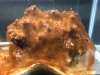
One [two] of the pieces of live rock that came from Tampa Bay Saltwater was basically a coral growing on a small piece of rubble rock; one branch was broken off. The coral appears to be a very thick branching coral with "large" polyps. Each branch is about the size of a thumb and the polyps are ~3/16" in diameter. I have yet to look up what they could possibly be; an LPS or SPS???
While in the sump, I would use a pipette to fed the polyps. After those few weeks, the corals appeared to be declining a bit. So last weekend, I decided to move the frags into my display to see if they would respond. I think they really like belong in the light and higher flow.

Here's the broken frag that I just stuck into a hole on my aquascape.
Looks happy to me! Look at that polyp extension!
Now if I can just figure out what the heck it is!

 
You can add me to the growing list too. I started up a 180G tank 10 years ago with live rock from Fiji (shipped overnight) purchased from Vinny at Ocean Devotion. That system ran for around 4-5 years and didn't have any major issues. I never measured PO4 or NO3 in this system and SPS grew without issue.

We built a new home in 2013 and I sold off the 180G system. I started up a custom 250G peninsula tank in September 2015 starting with 120 pounds of “cured” dry pukani from BRS (soaked in a barrel with circulation for 3 months) and 12 bags of Tropic Eden live sand from Premium Aquatics. After an initial bout of algae, the tank seemed to be doing well until January 2017 when dino reared its ugly head. My entire tank was covered…sand, rock, everything. It was awful. I started measuring NO3 in March 2017 (with the Red Sea test kit) and it was 0 so I started dosing KNO3 (stump remover). I think increasing NO3 helped reduce the dino but hard to say for sure. Over time, I also tried DinoX, NOPOx and a 50W UV sterilizer and adding a fuge with Kessil H380 to the system. After about a year of battling, the dino seems to have subsided for the most part but it seems to “come and go” on a cycle mostly growing on the sandbed. I have read the dino cysts can live up to 7 years in the sand.

Now, nearly two years later, I am still not dino free. It seems to still “come and go” for some reason but it grows mostly in the fuge with the chaeto. My SPS seem to be growing OK but still wonder how much the dino is still affecting the system and corals (growth, coloration). My water seems to have perpetual slight cloudiness to it and I can’t figure out why. And I have an undefined algae growing on some of the rocks and back glass that I think may be another form of dino. I recently added a couple Halloween urchins from New Wave to help out with this algae.

I have wondered on more than one occasion on what did I do wrong to get to this point? My first 180G tank was WAY better than my 250G tank…and I was “just a noob” with the 180G. Did I just get lucky??? I keep coming back to the simple fact that I started the 180G with live rock and the 250G with “cured” Pukani.

Anyway, very good thread. Thanks for starting this discussion. I felt compelled to chime in. I’m not sure what I am going to do myself. I have reservations about just adding 10% or 20% of live rock to my existing “affected” system. I sort of feel that the best approach (and definitely not the cheapest) is to flush the system and start over with at least 75% live rock and then fill with dry rock.
 
Last edited:
I was going to post some pictures but I can't seem to figure out how to. ; )

Click the "Upload a File" button near "Post Reply" when you're making a comment. Select your image, and then you can insert it into your post.
 
You can add me to the growing list too. I started up a 180G tank 10 years ago with live rock from Fiji (shipped overnight) purchased from Vinny at Ocean Devotion. That system ran for around 4-5 years and didn't have any major issues. I never measured PO4 or NO3 in this system and SPS grew without issue.
My return to the hobby in 2009 was all started with Fiji live rock; I loved that stuff. Once the rock was cycled for a couple of weeks, it was good to go with no more real issues. The rock was covered with various sponges, tunicates and worms; I know I have photos of those somewhere. It's a real shame to have lost that Fiji live rock.


Another minor rock update...
Last night while relocating the baby trochus snails that venture above of the water line, I noticed a small (~1/4") gorilla crab hiding out in a hole on the rock in my sump. After a few minutes waiting and prodding with a small nail set, I was able to smash the small crab. The neighboring snails and a peanut worm found the fresh crab meat delectable. #notonmywatch
 
Thanks DarkSky! I feel like an idiot now. ; )

Here is my 180G with that I started with live rock from Fiji...in hindsight that tank looked pretty darn good:
DSC_1057.jpeg

Here is my current 250G peninsula started with cured Pukani and live sand (September 2015):
IMG_1535.jpeg

And here it is with dino January 2017. Ugly huh?
IMG_4296.jpeg
IMG_0117.jpeg

I had actually syphoned some of the dino into a 10G test tank to experiment. I turned the MJ off for a couple hours and look how it "formed" like a ghost onto the rock.
IMG_0014.jpeg IMG_0015.jpeg
 
I'm curious to know if your results would have been better with Acid washed rock. That's how I started my first tank, acid washed dry pukani from BRS in a 10% solution of muriatic acid and tap water. I rinsed it with tap water, did a two Ro/Di soaks with copper remover, and tossed in in the tank. I had "live" sand (the stuff that's sold in bags), I doubt it was actually live, but I went that rout because the sand is usually cleaner. I ran a Marineland biowheel HOB filter to filter out the fine sand particulate for the first day (I've never seen anybody else do this, am I missing something?), and let it cycle along with some very small chunks of live rock I bought from Petco for a FOWLER tank that housed a pair of clowns (probably about 3 lbs). I got a small diatom bloom and that was it. I later set up a 24G nano using the same method, with the same results.
 
I'm curious to know if your results would have been better with Acid washed rock. That's how I started my first tank, acid washed dry pukani from BRS in a 10% solution of muriatic acid and tap water. I rinsed it with tap water, did a two Ro/Di soaks with copper remover, and tossed in in the tank. I had "live" sand (the stuff that's sold in bags), I doubt it was actually live, but I went that rout because the sand is usually cleaner. I ran a Marineland biowheel HOB filter to filter out the fine sand particulate for the first day (I've never seen anybody else do this, am I missing something?), and let it cycle along with some very small chunks of live rock I bought from Petco for a FOWLER tank that housed a pair of clowns (probably about 3 lbs). I got a small diatom bloom and that was it. I later set up a 24G nano using the same method, with the same results.

I think the key here is still that you at minimum seeded with true live rock. That’s essentially what we’re doing as well, just several months into the lives of our tanks vs right away. It seems like some bacteria or microfauna of some kind exists on live rock that just helps things start off better.


Sent from my iPhone using Tapatalk
 
I think the key here is still that you at minimum seeded with true live rock. That’s essentially what we’re doing as well, just several months into the lives of our tanks vs right away. It seems like some bacteria or microfauna of some kind exists on live rock that just helps things start off better.


Sent from my iPhone using Tapatalk
What does the live rock contain that can reduce/eliminate the issues you guys had though? I'm really struggling to see the correlation here, especially since, to my understanding, bleach doesn't necessarily strip the rocks of all organic matter to the degree that an acid bath does. I find it more believable that the spores survived the bleaching you gave your rock.

Also, I forgot to mention, my nano tank was not seeded with anything more than a cup of sand from another well established tank.
 
Last edited:
Live rock contains life; lots of it. Dry rock (whether bleached or acid washed) contains none.

When starting a new system with dry rock, we need to create a bacteria population that processes the nitrogen cycle. Whether it is accomplished slowly with adding an ammonia source or expediting the process with bottled bacterias, the end result is that we have established limited populations of specific bacteria cultures. The cycled dry rock is still missing a huge diversity of other bacteria, microfauna, microflora and invertebrates that are inherently established on live rock that has been cultivated in the ocean. Bottled bacteria supplements don't come with sponges, tunicates, algae, pods, worms and other life that seem to be important to establishing a biodiverse foundation for a reef tank. Sure, over time you would be slowly adding these organisms to your systems with the addition of corals and other livestock but until your system reaches any sizable population of these organisms, you're going to experience growing pains; as we've described.


Update on my system...
The TBS live rock has been in my sump for about five/six weeks. The life on the rock has really taken off; sponges and tunicates are growing and multiplying and no nuisance algae is present. I have found a small black urchin that I am allowing to live in the sump. I have noticed an increased population of trochus snails and micro brittle stars in the sump.
I have noticed sponge and tunicate growth on pieces of my substrate; this means that the life from the live rock in the sump is populating throughout the entire system. The coral frags in the display are doing much better. The montipora frags are beginning to color up and grow; some quickly now. A few dead frags had been left in the system as I wasn't too worried about the overall appearance of the display. As I went to pull them out last weekend, I noticed that three of those "dead" frags had live colored polyps still living on them. Those frags have been placed so I can monitor their recovery as the system's conditions continue to improve. So that's some good news.
The bad news is that I have obtained bubble algae from some of the frags I added to the system. I dosed Vibrant to combat the algae which in turn created a cyano outbreak, so now I'm dealing with bubble algae and cyano. But my corals are no longer dying!
 
Live rock contains life; lots of it. Dry rock (whether bleached or acid washed) contains none.

When starting a new system with dry rock, we need to create a bacteria population that processes the nitrogen cycle. Whether it is accomplished slowly with adding an ammonia source or expediting the process with bottled bacterias, the end result is that we have established limited populations of specific bacteria cultures. The cycled dry rock is still missing a huge diversity of other bacteria, microfauna, microflora and invertebrates that are inherently established on live rock that has been cultivated in the ocean. Bottled bacteria supplements don't come with sponges, tunicates, algae, pods, worms and other life that seem to be important to establishing a biodiverse foundation for a reef tank. Sure, over time you would be slowly adding these organisms to your systems with the addition of corals and other livestock but until your system reaches any sizable population of these organisms, you're going to experience growing pains; as we've described.


Update on my system...
The TBS live rock has been in my sump for about five/six weeks. The life on the rock has really taken off; sponges and tunicates are growing and multiplying and no nuisance algae is present. I have found a small black urchin that I am allowing to live in the sump. I have noticed an increased population of trochus snails and micro brittle stars in the sump.
I have noticed sponge and tunicate growth on pieces of my substrate; this means that the life from the live rock in the sump is populating throughout the entire system. The coral frags in the display are doing much better. The montipora frags are beginning to color up and grow; some quickly now. A few dead frags had been left in the system as I wasn't too worried about the overall appearance of the display. As I went to pull them out last weekend, I noticed that three of those "dead" frags had live colored polyps still living on them. Those frags have been placed so I can monitor their recovery as the system's conditions continue to improve. So that's some good news.
The bad news is that I have obtained bubble algae from some of the frags I added to the system. I dosed Vibrant to combat the algae which in turn created a cyano outbreak, so now I'm dealing with bubble algae and cyano. But my corals are no longer dying!
Have you noticed an adverse effect on your TBS rock after dosing vibrant?
Would you fill a display with TBS rock if you were starting over fresh, or do you prefer the keep it in the sump option?

Thanks!
 
Have you noticed an adverse effect on your TBS rock after dosing vibrant?
Would you fill a display with TBS rock if you were starting over fresh, or do you prefer the keep it in the sump option?

Thanks!
I have not noticed any effect to the live rock from dosing Vibrant.
When I added the live rock to my sump, I had pulled all of the macro algae off of the live rock and placed it into a mesh bag. I placed the bag into my display so that the algae would receive light. Some of the algae didn't fare well in the bag, but I ended up tossing it all out after I knew I was keeping all of the rock. There are still some strands of the algae present on the rock, but I don't anticipate any growth due to no light.

If I was to start over... tough question.
The art designer in me wants to create a visually attractive aquascape that I can control; #OCD.
The reefing hobbyists in me wants to have as much biodiversity as possible from live rock.
But I think I already know the course of action for a new build. I have been collecting pieces of dry rock (Pukani, Fiji and Tonga shelf) that I would plan to cycle for six months to a year with pieces of live rock ordered from somewhere. I would aquascape the dry rock beforehand so I could get the structures that I want visually. I would cement certain pieces together while allowing sections to taken apart to fit into whatever curing vessel I use. After the rock has cured for that long period of time, I would recreate the aquascape with the "dry" rocks along with any interesting pieces of the live rock; the rest would go into the sump or other container. (#Sanjays500gal)
So... I would basically do what I am doing now but months in advance of starting up the system itself.

Or.... I wait until they reopen rock collection in Fiji.
 
Live rock contains life; lots of it. Dry rock (whether bleached or acid washed) contains none.

When starting a new system with dry rock, we need to create a bacteria population that processes the nitrogen cycle. Whether it is accomplished slowly with adding an ammonia source or expediting the process with bottled bacterias, the end result is that we have established limited populations of specific bacteria cultures. The cycled dry rock is still missing a huge diversity of other bacteria, microfauna, microflora and invertebrates that are inherently established on live rock that has been cultivated in the ocean. Bottled bacteria supplements don't come with sponges, tunicates, algae, pods, worms and other life that seem to be important to establishing a biodiverse foundation for a reef tank. Sure, over time you would be slowly adding these organisms to your systems with the addition of corals and other livestock but until your system reaches any sizable population of these organisms, you're going to experience growing pains; as we've described.

Sure, live rock /sand /bottled bacteria will help speed up the cycle, but I don't see how it's going to drastically reduce/eliminate the issues you both had. What am I missing here?
 
Sure, live rock /sand /bottled bacteria will help speed up the cycle, but I don't see how it's going to drastically reduce/eliminate the issues you both had. What am I missing here?
I'm just curious if you watched the video that was posted at the beginning of this thread at all? I think Jason also had a pretty good explanation of our reasoning and thought process behind it. It really comes down to the fact that we are convinced there is something in long established live rock that is missing from starting a tank with dry rock, regardless of how you washed it/treated it/cycled it etc.

It's pretty clear you don't subscribe to this same theory and that's fine, we can't all agree all the time. But, you seem to be asking for more information, and I'm not sure there's more to give at this point. Are you going to be convinced even if we did find more evidence?
 
Last edited:
I have not noticed any effect to the live rock from dosing Vibrant.
When I added the live rock to my sump, I had pulled all of the macro algae off of the live rock and placed it into a mesh bag. I placed the bag into my display so that the algae would receive light. Some of the algae didn't fare well in the bag, but I ended up tossing it all out after I knew I was keeping all of the rock. There are still some strands of the algae present on the rock, but I don't anticipate any growth due to no light.

If I was to start over... tough question.
The art designer in me wants to create a visually attractive aquascape that I can control; #OCD.
The reefing hobbyists in me wants to have as much biodiversity as possible from live rock.
But I think I already know the course of action for a new build. I have been collecting pieces of dry rock (Pukani, Fiji and Tonga shelf) that I would plan to cycle for six months to a year with pieces of live rock ordered from somewhere. I would aquascape the dry rock beforehand so I could get the structures that I want visually. I would cement certain pieces together while allowing sections to taken apart to fit into whatever curing vessel I use. After the rock has cured for that long period of time, I would recreate the aquascape with the "dry" rocks along with any interesting pieces of the live rock; the rest would go into the sump or other container. (#Sanjays500gal)
So... I would basically do what I am doing now but months in advance of starting up the system itself.

Or.... I wait until they reopen rock collection in Fiji.
Thanks for the insight Jason!

On a side note, is the Fiji thing just wishful thinking or have you heard they are gonna open it back up?
 
Thanks for the insight Jason!

On a side note, is the Fiji thing just wishful thinking or have you heard they are gonna open it back up?
No problem.
Fiji live rock??? Very much just wishful thinking; that was my favorite rock!
 
On another note, that's sort of related to all this. In order to "combat" my algae issues, which have actually been gradually improving with the use of some Vibrant, I have two bins full of live rock from the @Garrett Smith tank breakdown. My plan is to simply keep it circulating and heating until I decide I'm ready and swap out the algae infested rock in my tank with this clean live rock.

But, before I do the swap I've puchased some Live Rock Enhancer from Reefbrite at @jlanger recommendation. In addition I purchased some of the new Helix Pink and Purple coralline additives. I plan to dose my bins of live rock with these products and see what happens. My goal is really just to get some good bacteria life going and maybe some coralline once I get it in the main tank. My concern with the Helix products is that I'd be dosing it into unlit bins, which might just be counterproductive. I don't really know.

I did transport the rock from Garrett fully submerged so there shouldn't be a lot of die off other than the fact the microlife isn't being fed much currently.

I don't expect to end up with an algae free display, but am hoping to reduce it to a point that my grazers can keep up going forward.

Yay experimentation!
 
Awesome thread guys. I did a ton of reading (like hundreds of hours) before setting up my 8 foot 300 gallon rimless. I mostly focused on reading through entire build threads of 300 plus gallon build threads. I didn’t read ones that were just built or ones that have been set up for six months. I read through threads of tanks from the beginning that were 3 to 5 years old. I stuck with the ones that were that mature and very successful. I figured there had to be recipes for success long-term. Of course I learned a ton of things and a lot of these people made mistakes along the way.

One key to success that most of these tanks had in common that had survived multiple years of time and looked great was mature liverock and diverse bacterial cultures. There were all kinds of ways to achieve this. One way was to use live rock out of the ocean like the subject of this thread. Another way was to use dry rock, cure for a long time, and seed with multiple different strands of bacteria. Another way was to build the aqua scape out of dry rock and then use mature live rock in the sump.

Of course I picked up a bunch of other methods of success such as algae scrubbing and UV sterilization. I basically thought of it as avoiding new tank syndrome. That is what my goal was with this build.

In the end it worked pretty well for me although my tank is not yet a year old. So far I have no nuisance algae other than a film of green algae that develops on the glass every 3 to 4 days. I have had very little STN as well.

I just kind of employed all of the methods mentioned above. I ordered five or six different bacteria’s in a bottle and added them liberally for the first 3 months. I also ordered several pounds of live sand out of the ocean from a vendor like TBS and mixed it in with my substrate. I also got some well-established live rock multiple years old from a member here. I place that mature live rock in my sample. I would guess it was probably somewhere around 20 or 25 pounds.

I went pretty crazy with filtration this time around as well. I put a huge oversize skimmer on and JLanger built me a kick ass algae turf scrubber. I put a large up sterilizer on as well.

I also threw in 200 hermit crabs and a bunch of sand sifting snails.

In the end I think is nowhere near perfect but I do believe I avoided new tank syndrome employing all these methods.
 

Users who are viewing this thread

Back
Top