What Marty forgot to mention, was that he took all my doubles of Bieber for his own collection.

Navigation
Install the app
How to install the app on iOS
Follow along with the video below to see how to install our site as a web app on your home screen.

Note: This feature currently requires accessing the site using the built-in Safari browser.
More options

You are using an out of date browser. It may not display this or other websites correctly.
You should upgrade or use an alternative browser.
You should upgrade or use an alternative browser.
Riley's 1000 gallon fish room build (1 Viewer)
- Thread starter Riley
- Start date
Mechanical Filtration: For the mechanical filtration, I am using an Aquadyne 1.1b bubble washed bead filter. It is similar to a sand filter, but instead uses a small plastic bead to trap particulate, and doesn't have the caking and channeling issues sand filters have. These beads also have a large surface area for bacteria making this also function as biofilter, however I will be relying on this purely for mechanical. With a system like this, it is important to remove waste before it feeds the nitrogen cycle. The bead filter uses a blower to aggressively agitate the media prior to backwash for a more efficient cleaning. The water loss during backwash is only 30 gallons. Once the filter is fully mature, this will be done weekly, so the system will have a 30 gallon weekly water change.

I really liked the idea of a commercial skid mounted system pack. Various manufacturers make these and they are really pricey, so I made my own for a fraction of the cost. Everything is mounted to a frp equipment pad. This will also keep this part of the filtration modular, should the need to move things around ever arise. I could technically run the whole system on this, but I wanted to also have a skimmer and an additional bio filter. The UV on it is an Emperor Aquatics 120 watt model.

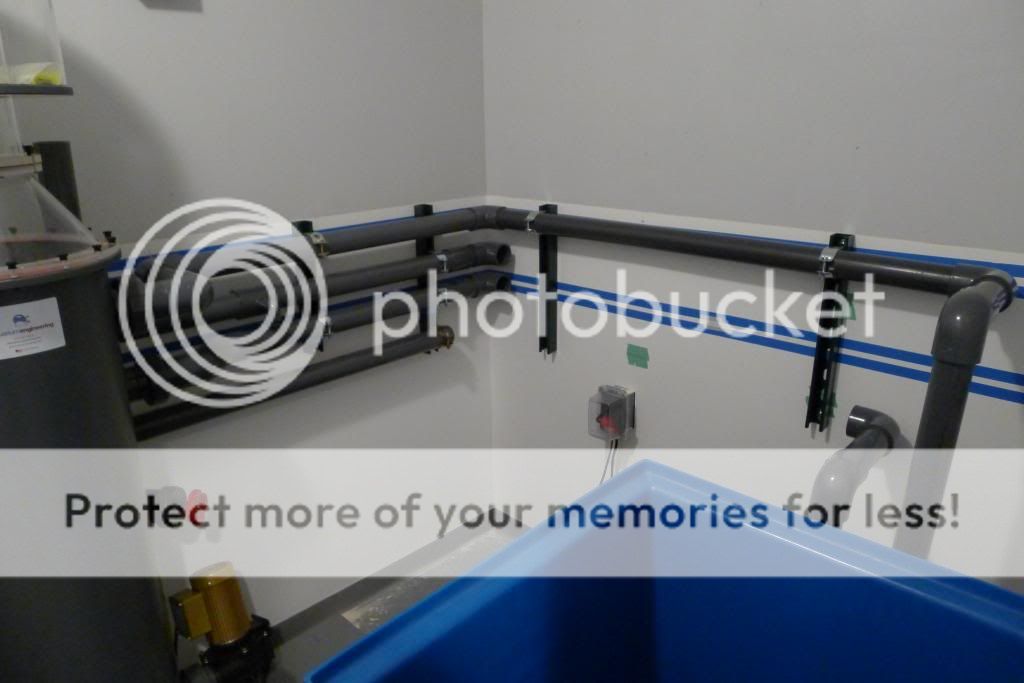
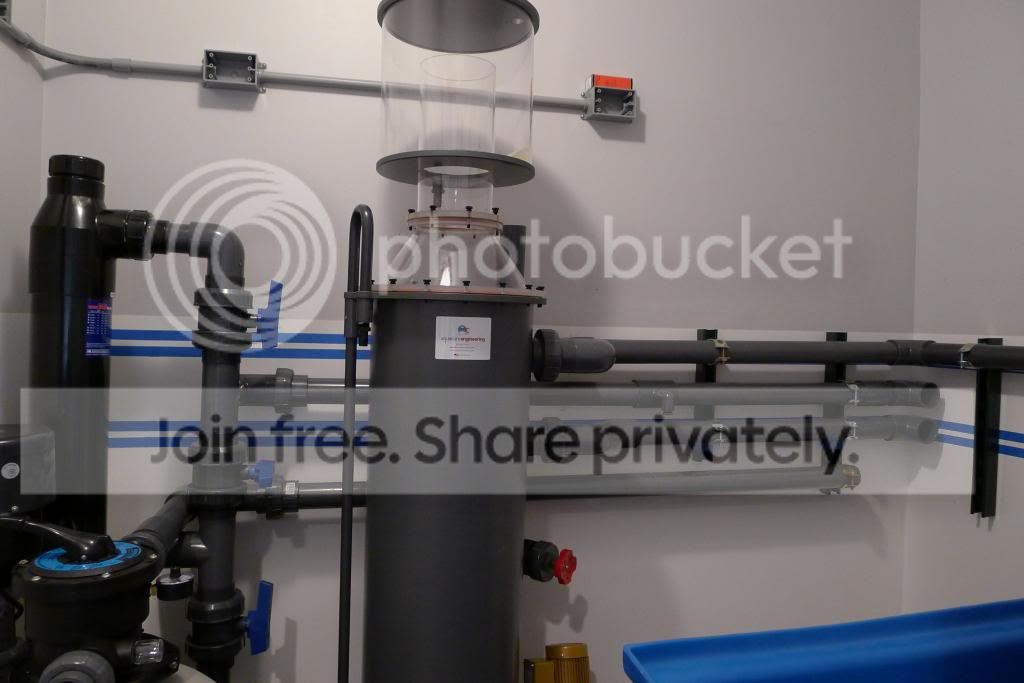
Here it is in place. The blue tape on the wall represents the plumbing from the skimmer to make sure it wouldn't interfere with the bead filter plumbing. Tape was run for each pipe around the perimeter of the room prior to gluing or cutting anything. I needed to make sure I could get from the pumps to each piece of filtration and back to the tanks the way I had it in my head, and also miss a low outlet in the closet for the house sump pump.
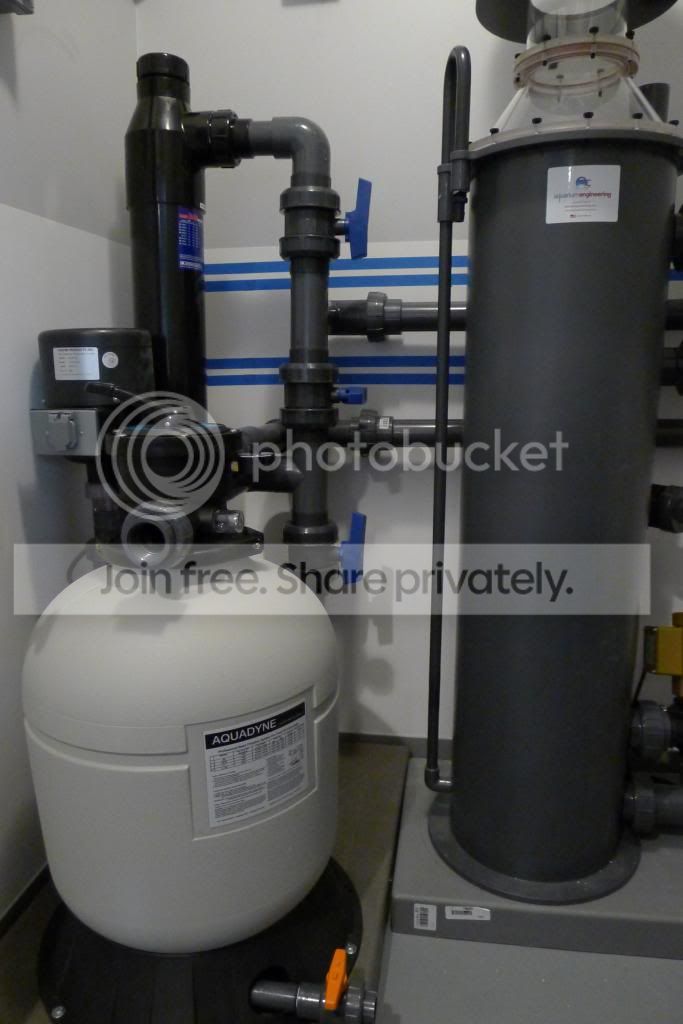

I really liked the idea of a commercial skid mounted system pack. Various manufacturers make these and they are really pricey, so I made my own for a fraction of the cost. Everything is mounted to a frp equipment pad. This will also keep this part of the filtration modular, should the need to move things around ever arise. I could technically run the whole system on this, but I wanted to also have a skimmer and an additional bio filter. The UV on it is an Emperor Aquatics 120 watt model.

Here it is in place. The blue tape on the wall represents the plumbing from the skimmer to make sure it wouldn't interfere with the bead filter plumbing. Tape was run for each pipe around the perimeter of the room prior to gluing or cutting anything. I needed to make sure I could get from the pumps to each piece of filtration and back to the tanks the way I had it in my head, and also miss a low outlet in the closet for the house sump pump.


There's probably around 70 feet of 2", 10 feet of 3", and 3 feet of 1.5" There's at least 40 feet of 2" in the filter room alone.
Biological Filtration: The Aquadyne bead filter shown before is a hybrid in that it can handle both mechanical and biological filtration. I am relying on it more for mechanical filtration and will rely more on a separate biofilter for nitrification.
The biofilter I'm using is a moving bed type using kaldnes media. An air pump creates a boiling motion that continually fluidizes the media. This boiling motion causes the media to bump into each other, scrubbing off the old bacteria leaving the younger, more efficient bacteria. This air driven motion also adds oxygen and strips off CO2. I went with this over bioballs because it is basically maintenance free, as I won't have to take out the media to clean off that flac that builds up over time, but still will provide good gas exchange.
This moving bed bio-reactor is 40 gallons and uses two cubic feet of kaldnes. It is colored black to keep the dark environment preferred by the Nitrobacter bacteria.
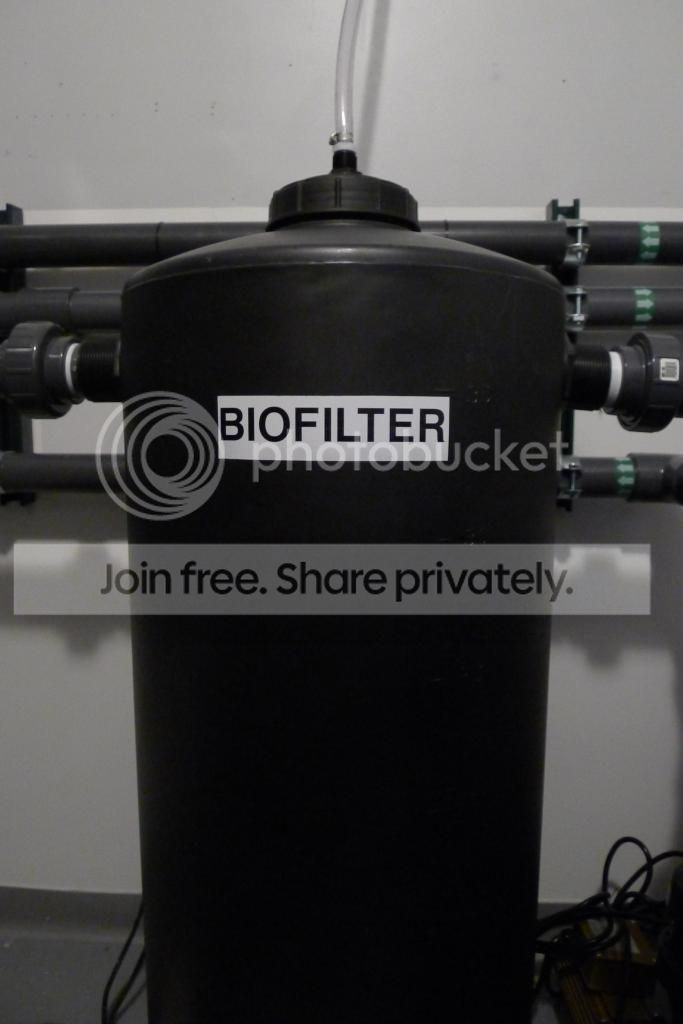

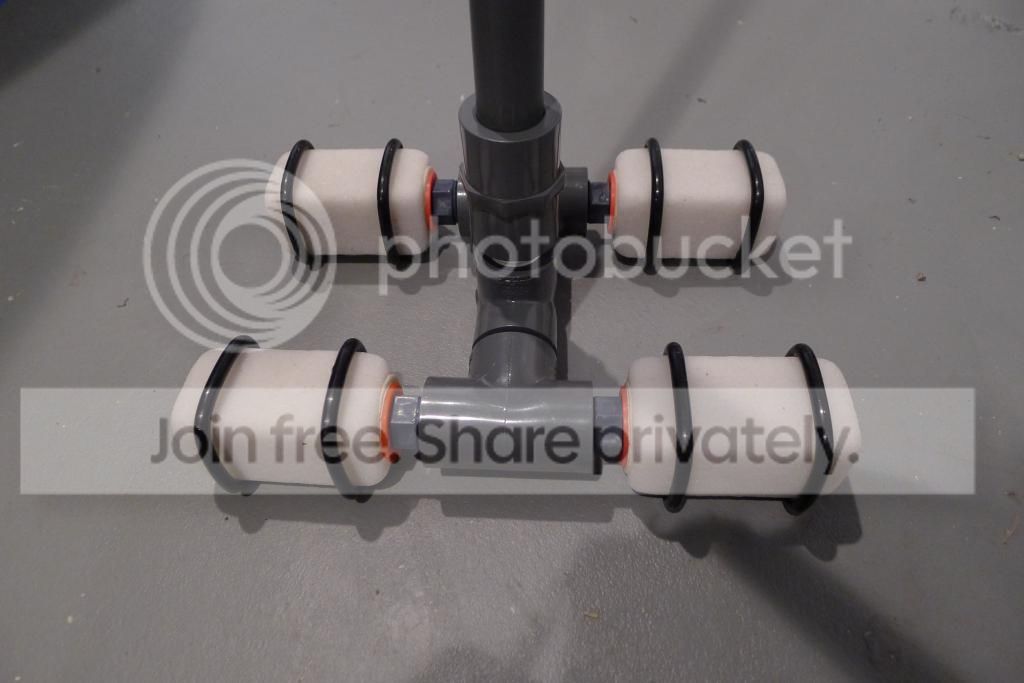
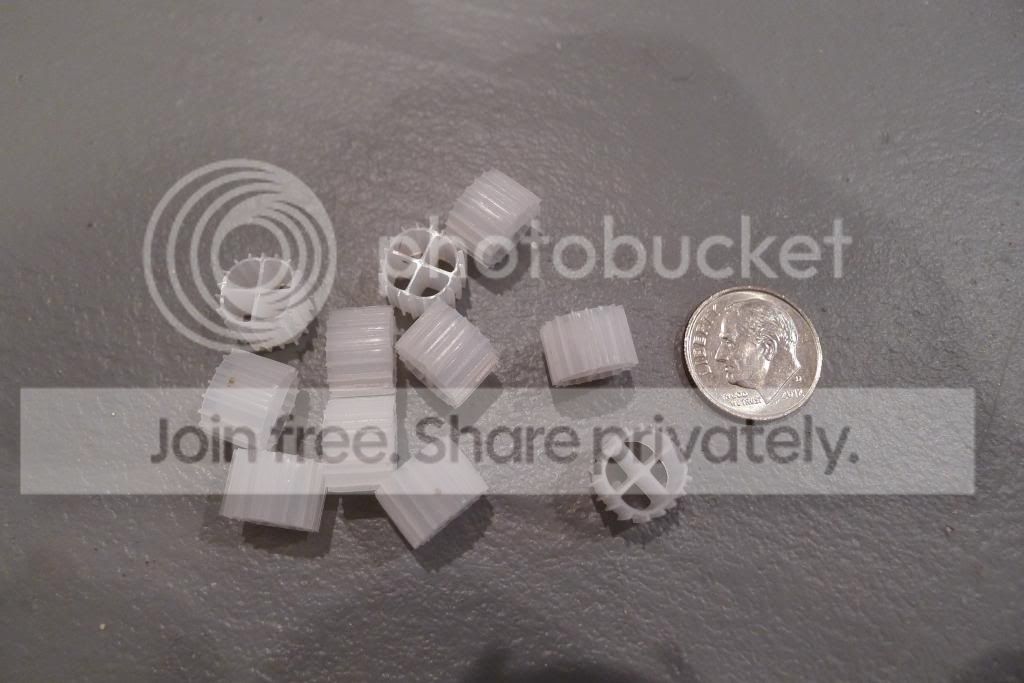
The biofilter I'm using is a moving bed type using kaldnes media. An air pump creates a boiling motion that continually fluidizes the media. This boiling motion causes the media to bump into each other, scrubbing off the old bacteria leaving the younger, more efficient bacteria. This air driven motion also adds oxygen and strips off CO2. I went with this over bioballs because it is basically maintenance free, as I won't have to take out the media to clean off that flac that builds up over time, but still will provide good gas exchange.
This moving bed bio-reactor is 40 gallons and uses two cubic feet of kaldnes. It is colored black to keep the dark environment preferred by the Nitrobacter bacteria.


I've read good things about these, be fun to see how it works for you.The biofilter I'm using is a moving bed type using kaldnes media.
I laughed at that skimmer photo, it makes the reeflo pump look like a powerhead.

OMG this is amazing! Equipment has always turned me on... WOW! What is that skimmer?
This is going to be AWESOME!!!!!!!!!!!!!!!!!!!!!
This is going to be AWESOME!!!!!!!!!!!!!!!!!!!!!
I think my skimmer would fit in that collection cup! Very cool!
Here is some more skimmer porn for all of you - a comparison of a 200mm skimmer and the collection cup:

Depending on what size of skimmer you have, it could very well fit.
Denitrification: I decided to go with an Aquarium Engineering built sulfur based reactor with 6 x 30” chamber. It will be monitored by an industrial ORP controller to keep it running at -250 mv to keep the necessary conditions for the autotrophic process. It won't be in service right away, but after the system is more mature and nitrates start creeping up.
With a large system like this, large weekly water changes just to keep nitrates down becomes unfeasible. The alternative is to look into denitrification, either heterotrophic (biopellets, carbon dosing) and autotrophic (sulfur). I chose sulfur since its something that would be easy for me and is tried and true in industry and commercial applications.
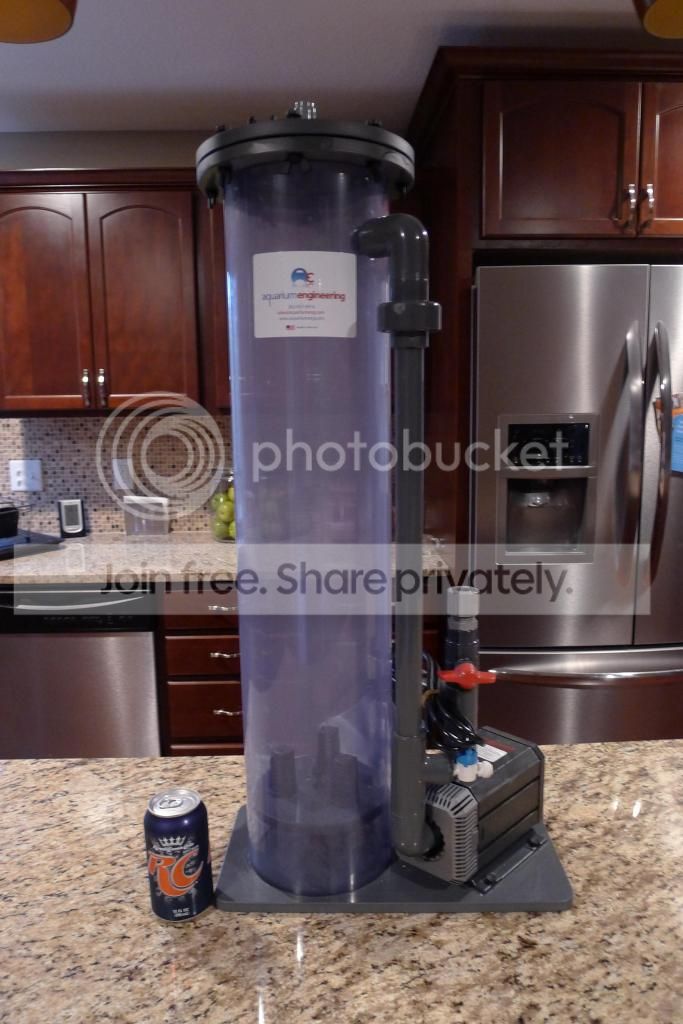
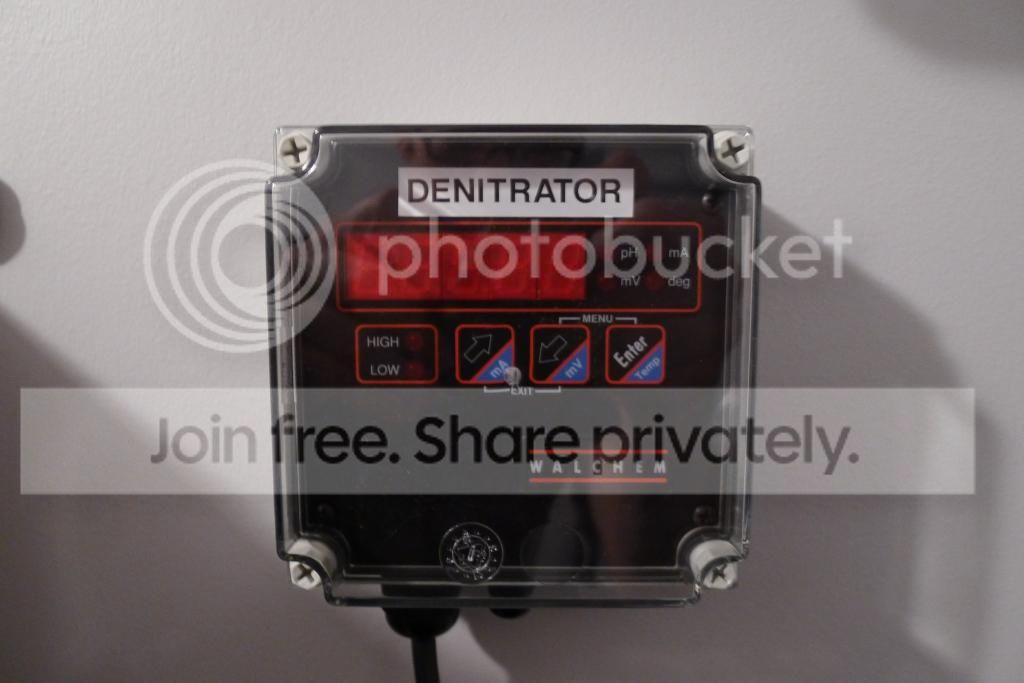
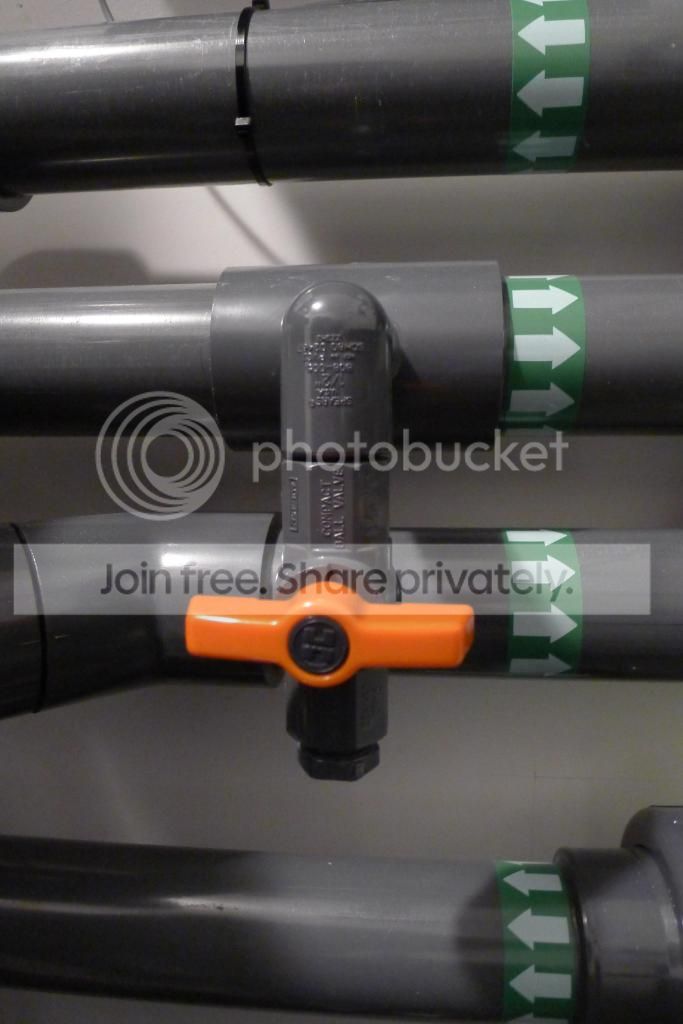
Here's where I tapped the system return line to feed the reactor. I still need to install 1/4 push-lock fittings in everything.
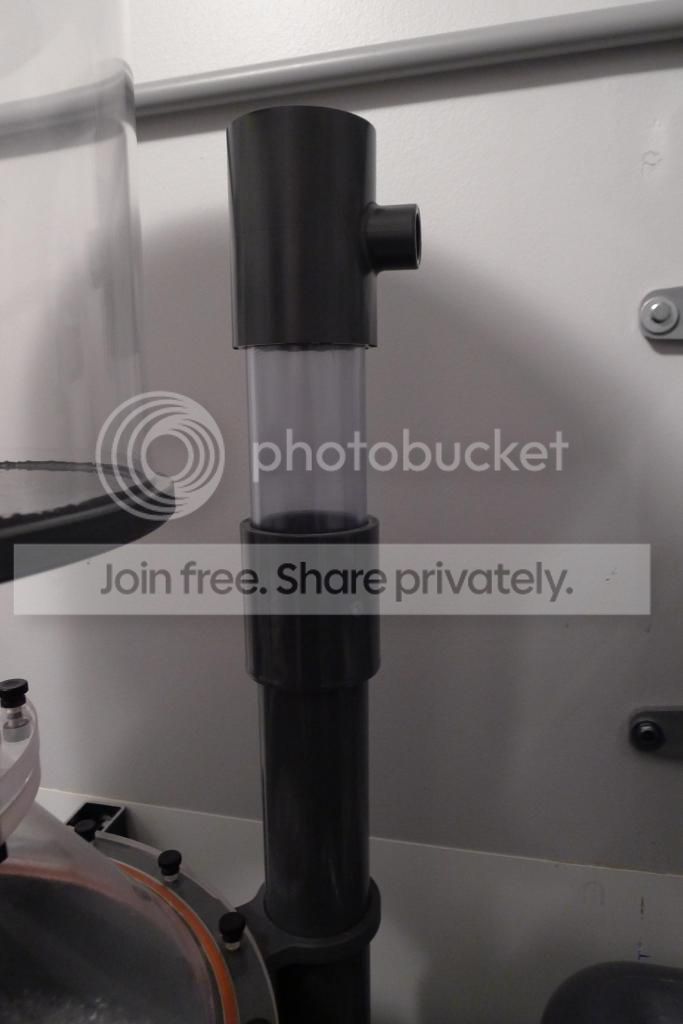
This is where I will return the reactor effluent, into the skimmer vent. The effluent exits the top of the reactor through a SMC needle valve where I can precisely dial in the flow rate. It feeds into the tee and goes through a 90 that I machined to fit inside. This way it will drip in the center of the pipe, then if need be, I can monitor the drips or the flow trickle through the small length of clear pvc I installed.
Bottom of the vent tee:
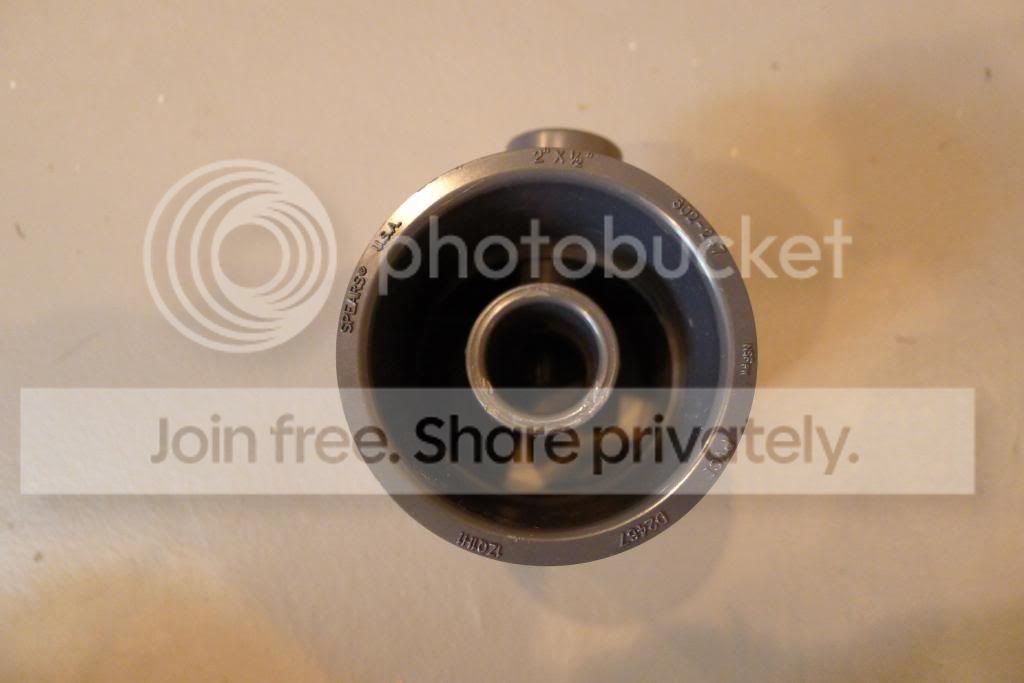
After modifying the elbow:
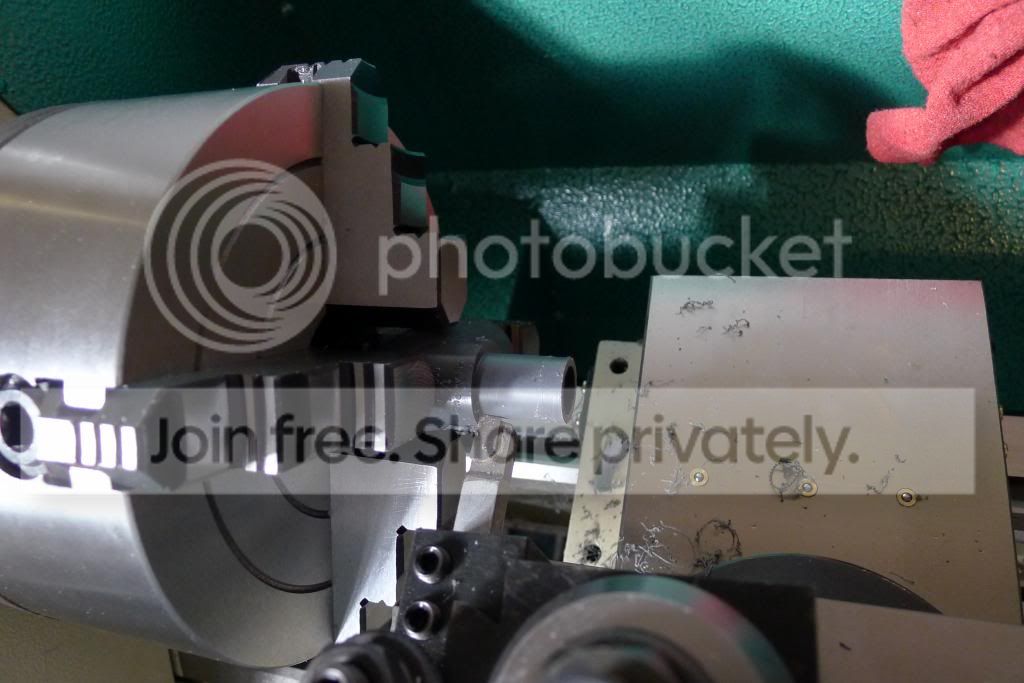
With a large system like this, large weekly water changes just to keep nitrates down becomes unfeasible. The alternative is to look into denitrification, either heterotrophic (biopellets, carbon dosing) and autotrophic (sulfur). I chose sulfur since its something that would be easy for me and is tried and true in industry and commercial applications.


Here's where I tapped the system return line to feed the reactor. I still need to install 1/4 push-lock fittings in everything.

This is where I will return the reactor effluent, into the skimmer vent. The effluent exits the top of the reactor through a SMC needle valve where I can precisely dial in the flow rate. It feeds into the tee and goes through a 90 that I machined to fit inside. This way it will drip in the center of the pipe, then if need be, I can monitor the drips or the flow trickle through the small length of clear pvc I installed.

Bottom of the vent tee:

After modifying the elbow:


Here is some more skimmer porn for all of you - a comparison of a 200mm skimmer and the collection cup:
Depending on what size of skimmer you have, it could very well fit.
That is definitely skimmer porn. Is that even real?

You have a serious build going. Please keep us posted!

I've been following along, and this is awesome. Keep up the great work!
You definitely know your stuff - what is your day job?
You definitely know your stuff - what is your day job?

I've been following along, and this is awesome. Keep up the great work!
You definitely know your stuff - what is your day job?
I've been contracting the last three years doing industrial panel wiring type work. Right now I work at a fiber optic company building helping them build a run of small prototype machines to automate a process to put connectors onto fiber optic cables.
Do you have the reef tank with the 2 scribbled angels? Or is that someone else?
No, I'm not the guy. I do have a 180 in our family room that's been sitting empty for almost a year and a half and the most patient wife ever.
Come on, post the power buttons with lights!!!
Backwashing the bead filter was something I wanted to make easier for myself, so I wired two outlets to this box. One outlet is across the filter room for the main pump, and the other one is next to the bead filter for the blower. When I need to backwash, I'll have to turn the pump and the blower on and off at different times. This will make things easy with no plugs to pull in and out of the outlets, and I can stay next to the filter the whole time.
Each light illuminates when its switch is activated:


Heater: It is an 1800 watt inline titanium heat exchanger that is made for the aquaculture industry. It is ptc based (positive thermal coefficient) with a ceramic element and is energy efficient. It works on a resistance curve, so the warmer it gets, the more resistance there is, so less current is passed. The heater element doesn't come in contact with the water, so I won't have to disconnect the plumbing in the event that I have to change a heater someday.
I have it turned way down for system testing:
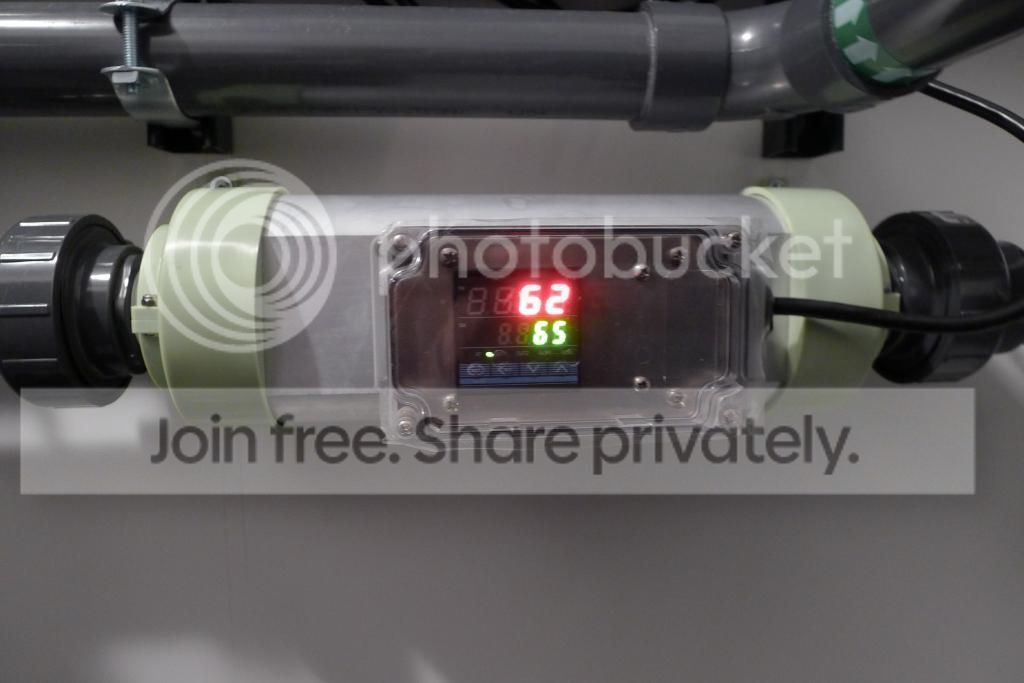
I have it turned way down for system testing:

I do plan on using an Apex, mainly for monitoring and data logging. I like that I can log in anywhere in the world and check on the system. I will be using one for monitoring of ph/orp/salinity, temperature, leak detection, and controlling lights.
Here is a manifold I put inline the plumbing. The plugs can come out for cord grips to hold standard laboratory type probes to connect to the apex.
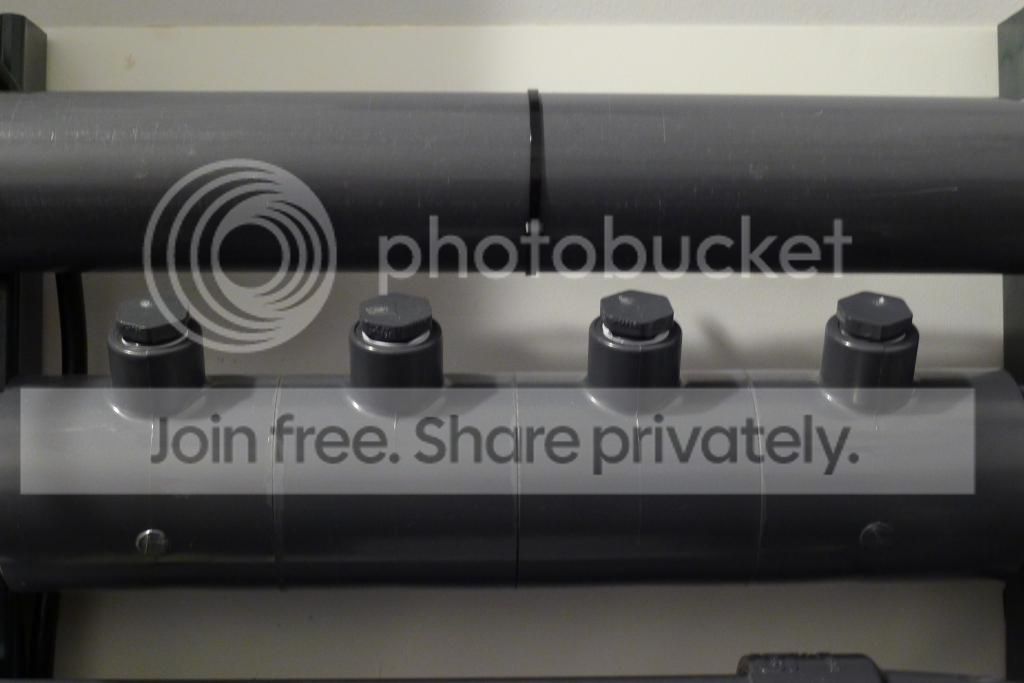
Here is a manifold I put inline the plumbing. The plugs can come out for cord grips to hold standard laboratory type probes to connect to the apex.

Here's a shot of the plumbing being ran. You can see the tape lines I made beforehand to make sure all four lines wouldn't interfere with each other nor the outlet for the house sump. These pipes are all 2"
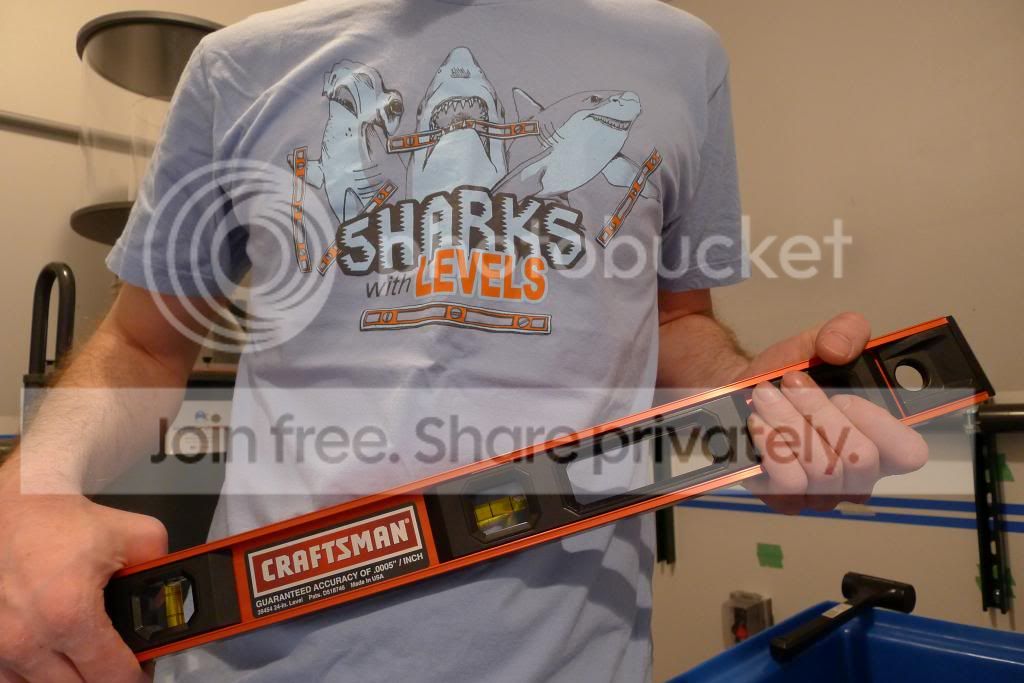
I made sure everything was straight:
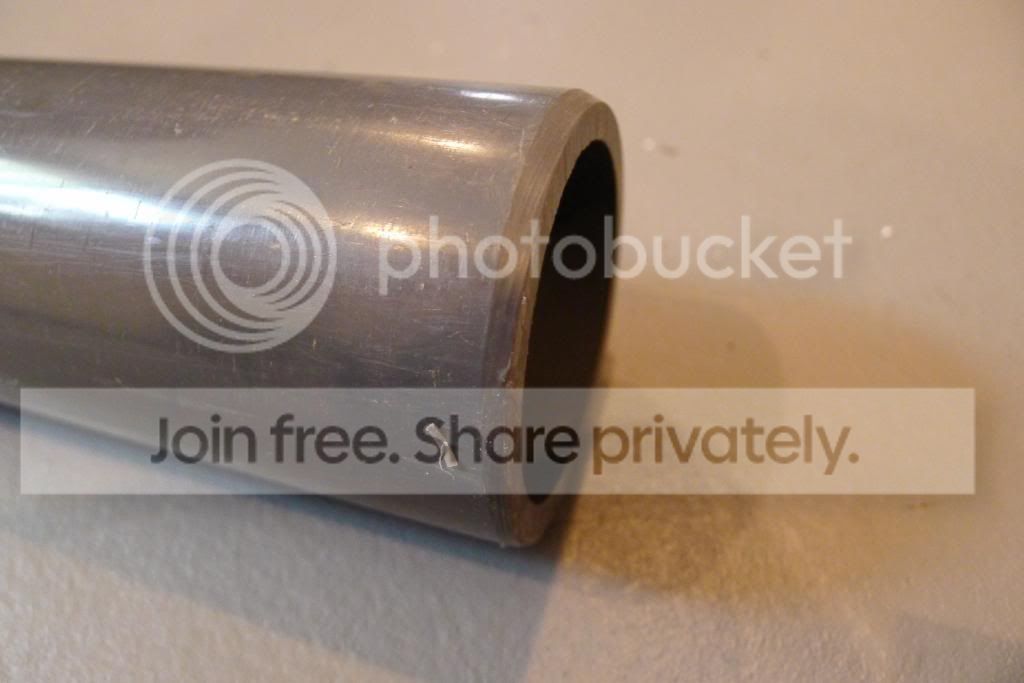
Another thing I did was bevel all my ends, something that most people skip:


I made sure everything was straight:

Another thing I did was bevel all my ends, something that most people skip:


jlanger
@thatfishcookieguy
Lifetime Member
Event Committee
Meeting Host 2020
Meeting Host 2021
Meeting Host 2022
Does anyone else get the sense that Marty might be getting envious?
I know I am!
Great job on planning and executing such an immense project!
I know who I'm going to contact when I hit the lottery!
I know I am!
Great job on planning and executing such an immense project!
I know who I'm going to contact when I hit the lottery!
Users who are viewing this thread
Total: 2 (members: 0, guests: 2)