

Banner image
Update: Sumps 101 - The Lazy Susan Sump

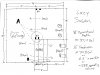
I finished designing my sump with a few ideas and twists in mind. Scaling is not 100% accurate but the measurements are, so don't rag on me too hard (o:

Important Elements:
  1. Space maximizing is critical since it will all be under the tank and little ability to have equipment elsewhere (other than RO/DI, more fun on that later).
  2. Enough head room for a 30% water change from the sump and offer excessive protection against pump failure.
  3. It needs to allow for a very high flow rate from my dual straight pipe overflow. No durso here.
  4. The filter sock needs rethinking... it's noisy, I forget to change it, and in the past has been a limiting factor to my overflow due to back pressure.
  5. Overflows and returns need to be centrally located for naturally more balanced flow rates... especially the overflows.
  6. Rethink the baffles to possibly minimize waterfalls, particularly when I've forgotten to refill my top off and the sump gets low.
  7. Enough room to allow for larger pipe screens on pump intake. Larger for less cleaning.
  8. Access from both sides of sump.
  9. More efficient refuge or benthic zone to increase amount/time of water exposure.
To Filter Sock or to Not Filter Sock:
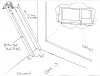
Instead of a filter sock I'm fashioning a filter screen. Think of your air filter on the furnace. This needs to be at a slant so that the water doesn't waterfall partially when I don't clean it in time. This will also block many bubbles created by my cheapo skimmer in addition to the overflow. Also allows for significantly higher flow rates in my straight pipe over flow design due to no back pressure. I have not calculated the surface area of the screen compared to a sock though. I'm sure it's less but frankly I hoping for an improvement over me not using one.

Baffled by Baffles:
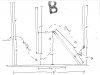
I slipped the final baffle to allow for lessening of the waterfall if my top off is low.

Long and Short of the Refuge:
I've narrowed and elongated the refuge or benthic zone to allow for stages if I want. Either way it will allow for more water moving past my desired elements then I've achieved in the past. For macro I'd certainly need to stage it in mini sections or it'll all just end up at the end!
201707061926021000.jpg 201707061926021001.jpg 201707061926021002.jpg
 
Last edited:
I understand the desire to move away from filter socks as they can be tiresome to clean. But after adding them to both of my sumps this summer (the first time I've ever used them), I'm happy with how well they keep my water (and sump) clean. Since you're incorporating a refugium/benthic zone, you may want some of that "crud" to get to that zone.
The problem I could foresee with the filter floss screens is that as they clog, they get very heavy and the floss doesn't stand up well to the weight or water flow. I used filter floss with my AIO system and it deteriorated quite quickly as it collected detritus and whatnot. With having the floss being vertically oriented, I'm not sure how well it will stand up [insert rimshot].

To help with noisy filter socks, I would recommend adding a separate chamber for just the drain pipes and then have the water flow over a baffle onto a filter sock plate where the water can gently flow down into the filter socks. I built my small sump with this design and it's dead silent! If the filter socks get clogged and there's too much flow, the water flows over the baffle supporting the filter sock plate and into the next zone; no flooding. The one design change I contemplate about mine is to have the filter sock plate placed after my skimmer; to help eliminate microbubbles from getting to the return pump.
 
Very good points. What I'll maybe do is put some slide zones in a couple spots before installing so I can plug n play different system options easily... all I'd be out is a little acrylic.

On the filter screen to be clear I didn't plan on using floss but good to know as I have no experience with it. What I was going to do was use actually filter sock material that I could still wash. I just have to find where to buy it.

I don't know entirely how I would support/hold it in place yet but my first thought was egg crate on the down stream side. Problem with that is it would absolutely be loud and pretty sure that defeats the purpose.

Ideas needed.
 
Last edited:
For holding the filter screen I'm thinking some kind of frame and thin vertical strips, rods or maybe heavy fishing line.

Possibly sewing the ends over to have rods that slide through and somehow fasten in the corners...
 
The steep angle reminds me of a Cetus sieve filter. They are for ponds but you supposedly can buy just the "wedge wire" filter screen replacements in various micron ratings. These filters are designed to flow several thousand gph so flow shouldn't be an issue. The waste ends up at the bottom of the screen and you scoop it out. Alternatively you have the waste go to a tank and you open a valve to drain it. It would definitely take some thinking but might be a viable option for a creative diy'er.
 
To help with noisy filter socks, I would recommend adding a separate chamber for just the drain pipes and then have the water flow over a baffle onto a filter sock plate where the water can gently flow down into the filter socks. I built my small sump with this design and it's dead silent!

I just looked at your sump again and I know why it's so quiet compared to others I've seen... your water level is definitely higher. I'm going to put in the spots to plug and play your idea and a few others but I'll have to think though the design a bit more with my water levels being lower.
 
Can someone please check my logic on pressure loss...
download.jpg
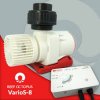
With the VarioS 8 the output is 1.25" and the head loss on that is as follows. I'll be at 5' of height.
flow-chart-v8.jpg
Based on an anecdotal video on BRS for a pump with slightly less flow and similar max head height I will see as much as a 25% loss of pressure at 5' due to the 1" bulkheads used on a 300dd instead of the recommended 1.25" on this pump. In their video it was almost 50% loss at 3' of height.

Question 1, is my logic reasonable?
Question 2, if I reduce the flow of my pump via the controller will it essentially stay the same for flow until reduced past the point where the 1" pipe is no longer the limiting factor?
Question 3, if question 2 is accurate would you still consider going through the wall with the plumbing and bi-passing the tank bulkheads? I'll need to with one of the two pumps regardless.

I personally expect the loss of head pressure to significant enough to run the pipes through the wall.
 
keep one thing in mind, running too much flow through the 300dd, you will see your cross bracings underwater.
 
keep one thing in mind, running too much flow through the 300dd, you will see your cross bracings underwater.

I agree and ran into that problem in the past, I've made some modifications to the Marineland overflows in the past which have improved them significantly when combined with a dual straight pipe.

I may still have more flow then I can handle if both are on full but my intention is to have the pumps alternate on say a 90%/40% output so I'd like the one ramped up to really be giving it all it can.

The only thing that could easily change my opinion on the alternating is if it causes more significant noise issues. I will also have at least one wide open emergency drain.
 
I agree and ran into that problem in the past, I've made some modifications to the Marineland overflows in the past which have improved them significantly when combined with a dual straight pipe.

I may still have more flow then I can handle if both are on full but my intention is to have the pumps alternate on say a 90%/40% output so I'd like the one ramped up to really be giving it all it can.

The only thing that could easily change my opinion on the alternating is if it causes more significant noise issues. I will also have at least one wide open emergency drain.

what did you do? i only use one of the corner flow and cut out the other. i removed every other "teeth" on the overflow cover that seem help a little, not enough to have some meaningful increase in gph through the display.
 
keep one thing in mind, running too much flow through the 300dd, you will see your cross bracings underwater.

I cut out all the teeth and cut down even lower (maybe an inch?) to the overhang just above where it draws in from the bottom vents (to keep them functional).

I then replaced those teeth with egg crate because it was convenient... not pretty. However, I later removed because I made a large flow box over the intake instead which looked and worked better.

Last and easily as important as the cutting out of teeth... I ran the primary drain straight down into the sump without a single bend (this build will have a 45). This created exceptional flow.

Example: on my 200gal dual overflow Marineland I had a Iwaki MD-100RLT - 2136 gph wide open. One drain was restricted to 1/4th flow and snaked through a large UV. The primary straight pipe was reduced by ~40-50%... both with gate valves.
 
I cut out all the teeth and cut down even lower (maybe an inch?) to the overhang just above where it draws in from the bottom vents (to keep them functional).

I then replaced those teeth with egg crate because it was convenient... not pretty. However, I later removed because I made a large flow box over the intake instead which looked and worked better.

Last and easily as important as the cutting out of teeth... I ran the primary drain straight down into the sump without a single bend (this build will have a 45). This created exceptional flow.

Example: on my 200gal dual overflow Marineland I had a Iwaki MD-100RLT - 2136 gph wide open. One drain was restricted to 1/4th flow and snaked through a large UV. The primary straight pipe was reduced by ~40-50%... both with gate valves.
cool, i have extra removable overflow cover, for the extra one i cut out an opening from the top of the overflow teeth to just below the back wall of the overflow. now i dont see the cross bracing anymore. now just need to put something over that open to avoid fish go into the corner flow.
you got pic of the large flow box?
 
I just looked at your sump again and I know why it's so quiet compared to others I've seen... your water level is definitely higher. I'm going to put in the spots to plug and play your idea and a few others but I'll have to think though the design a bit more with my water levels being lower.

The overall height of the water level is the main reason for the low sound level, it's keeping the change in water levels at a minimum.

Most of the sound from a sump comes from the water exiting the drain lines.
In my new sump the drain chamber is 10" deep. I have the drain lines extending into the water by only an inch; and those ends are cut at 45° angles. As the water fills the drain chamber and then flows over the sock plate and through the filter socks. The water level in the filter sock chamber and the skimmer chamber is set at 8-½"(?) deep per the skimmer operating recommendation. The water exits the filter sock chamber through the bottom opening; thus no waterfall here. Then the water flows over the baffle to the return chamber which maintains a relatively consistent depth via ATO.

So if your sump is 24" deep, you can start with any depth for the drain chamber. Once the water starts flowing into adjacent chambers, keeping those water level drops somewhat close really helps with noise. I like to keep the drops at an inch per chamber.
Since I know what water level is recommended for my protein skimmer I start there, then I adjust up/down the water levels for the other chambers from there.

If you have any other questions or thoughts, just ask.
I regret not making a video of my sump in operation before it was installed in the stand. I think it would've helped show exactly how it works.
 
you got pic of the large flow box?

I've been looking for a photo that I had but I can't seem to find it. Basically you just take 6 sections of egg crate that are about 4 by 4 and zip tie them altogether to create a box. Then you make sure the down sections are at least 2 squares longer so hang down and so they slide perfectly over a 1 inch pipe

As for cutting the overflow... there is a lip or something (I forget how it looks) on the inside of the removable plate that acts as a siphon to draw water off the lower intakes. Works like an airplane wing with high flow over the top creating low pressure and drawing up water. Just cut it down right above that so that the siphon still works.
 

Seem to all make sense. Also just thought of a problem with my design which will be fixed when I get it. Inherently the filter sock changes the water level as it gets clogged up so I'll have an easy fix to rectify that.
 
I've been looking for a photo that I had but I can't seem to find it. Basically you just take 6 sections of egg crate that are about 4 by 4 and zip tie them altogether to create a box. Then you make sure the down sections are at least 2 squares longer so hang down and so they slide perfectly over a 1 inch pipe

As for cutting the overflow... there is a lip or something (I forget how it looks) on the inside of the removable plate that acts as a siphon to draw water off the lower intakes. Works like an airplane wing with high flow over the top creating low pressure and drawing up water. Just cut it down right above that so that the siphon still works.
if you dont cut below that lip at least for me it didnt lower the water lvl enough to not see the bracing. i dont care the lower intake that much, but i do like not seeing the cross bracing. lol
 
Seem to all make sense. Also just thought of a problem with my design which will be fixed when I get it. Inherently the filter sock changes the water level as it gets clogged up so I'll have an easy fix to rectify that.

Yep. I made a cutout in the baffle ¾" above the filter sock plate so that if the filter socks clog too much, the water will flow through the opening into the skimmer chamber.
 
Can someone please check my logic on pressure loss...
View attachment 31631
With the VarioS 8 the output is 1.25" and the head loss on that is as follows. I'll be at 5' of height.
View attachment 31632
Based on an anecdotal video on BRS for a pump with slightly less flow and similar max head height I will see as much as a 25% loss of pressure at 5' due to the 1" bulkheads used on a 300dd instead of the recommended 1.25" on this pump. In their video it was almost 50% loss at 3' of height.

Question 1, is my logic reasonable?
Question 2, if I reduce the flow of my pump via the controller will it essentially stay the same for flow until reduced past the point where the 1" pipe is no longer the limiting factor?
Question 3, if question 2 is accurate would you still consider going through the wall with the plumbing and bi-passing the tank bulkheads? I'll need to with one of the two pumps regardless.

I personally expect the loss of head pressure to significant enough to run the pipes through the wall.

The basic rules are that every elbow adds 1' of head and every 10' of pipe also adds 1' head. The flow chart indicates those pumps lose volume pretty quickly at higher head pressures . Depending on how your returns are plumbed you may be past the point where the 1" bulkhead make much of difference. Throw a few elbows and some pipe on there and your flow is already down to under 1000gph. Just my 2 cents
 
The basic rules are that every elbow adds 1' of head and every 10' of pipe also adds 1' head. The flow chart indicates those pumps lose volume pretty quickly at higher head pressures . Depending on how your returns are plumbed you may be past the point where the 1" bulkhead make much of difference. Throw a few elbows and some pipe on there and your flow is already down to under 1000gph. Just my 2 cents

That's exactly the kind of answer I was looking for. Still better flow than my big Iwaki though relative to pressure so I'll allow it (o:
 

Users who are viewing this thread

Back
Top