

Banner image
Here's the response from Honya, "Using 1" PVC or 1.25" , the measurements is very close.
Best Regards ,
Service Team
Honya CO.,LTD".

So I guess I'll have to trust them and stick with 1" pipe and fittings... should save me $200 in plumbing easy.
 
While I agree that 1" is big enough, that is a lazy answer on their part and probably doesn't directly answer the question you were asking. They are close in size but every step up in diameter increases the interior surface area by a significant percentage thereby reducing the wall friction and flowing more water.( I spent way too much time reading about flow rates this spring for another project.) There are charts that explain it better and give numbers but that is the basic principle. (Ha! I guess now I'm the lazy one for not providing them either :) )

I'm not sure on the DC pumps because they already have such a large outlet versus volume, but most pumps flow better if you step up the plumbing 1 size larger than the pump outlet. ( for reasons stated above?) If you really want every last ounce of flow out the pump you might consider sticking with 1.25" or larger pipe as far up as it is logical to do so ( a manifold?).
 
you might consider sticking with 1.25" or larger pipe as far up as it is logical to do so ( a manifold?).

Thanks for the insight... I thought it was a lazy answer as well but then again I was feeling a little lazy in making yet another decision so I was going to let it slide (o;

Maybe I'll run it at 1.25" and step it down to 1 at full tank height.
 
I dug into pipe size a bunch when I was redoing my tank. I forget the math, get ahold of Riley if you want the logical answer, but I'd even go to 1.5" if your desire was max flow. As you increase in size the surface friction and loss from elbows decreases exponentially big time (think compound returns in ages 60-70 when start investing in your early 20's!)

If your using schedule 40 piping it would be much cheaper (I assume) and much more available parts. I ran 2" feed and reduced at the t in the tank to a pair of 1".

Don't listen to folks who say bigger pipe equals more head pressure on the vertical run, if it was true when you put your toe in the ocean it would be crushed...:). (Stole that line from Riley)
 
Arrrg, now it's just a matter of deciding if the added cost of valves is worth it on flow. One valve alone is $20 more at 2" and I need 4! Do you think it's worth cheating and 12" of bulkheads, valves, & pump at 1.25" then up to 2" to the top of the tank before reducing to 1"?

I do have one cheep-o modification trick up my sleeve to increase flow that I'll explain when I start constructing it. Not like "new" but I'm not seeing anyone else trying it.
 
You would be better off going with largest to smallest. If you had a large pipe going up from the pump, and then split the flow to two returns, you could calculate the pipe size needed after the split based on flow of each split (ie 1 1/2" split to two 1") Not sure how your doing that part - I may have missed it.

Rather than write a long explanation of friction loss in pvc pipe and fittings, here is a calculator to play with. Try different flow rates with different pipe sizes and see how different fittings impact. You will see why with a pump with an 1 1/4” outlet, at your desired flow, it is better to go up in pipe size than go down. --- at least until you get to a bulkhead.

http://www.freecalc.com/fricfram.htm

With going up one size, or down one size, think of the pump outlet as an on-ramp to a road of pipe. 1” represents road construction with two lanes going to one. 1 ¼” is a two-lane highway. 1 ½” is a four-lane freeway with better flow.

Since you are now talking about ball valves being $20 more at 2”, I assume you are talking about the Cepex true-union ball valves sold at Bulk Reef Supply. If you go to US Plastic and look at the Cepex ST series of true-union ball valves, they are about half the price of the Cepex industrial ball valves you were looking at. They still have the same buttery-smooth performance.
 
This is why I love you guys, do you know things I don't and you're all just as cheap as to me :)
 
Well I can't say that I have any idea about what I'm reading however the simple fact is that the main part of my plumbing will loose 15.5' of head at a 1" pipe vs 1.1' on a 2" pipe. Even if I didn't do it perfectly that is still a lot of head loss.

I did not include all the fittings where I branched off to various outlets as I figured the main run was enough.
Screenshot_20170711-210619.png
 
+1 on the US Plastics ball valves, great units and half the cost. I wish I would have found them sooner.

I'd say, not based on any facts, that 2" would be overkill for a 300g. Cost increase in valves and somewhat more difficult in working with it etc. make me think it's a little much for a 300g with a sump underneath setup. Going from 1" to 1.5" is a big step up in flow and reduced friction.
 
Marty the flow from a 1.5" to a 1" is almost exactly 50% reduction in volume... I think you are correct. Notable lower cost, not a big loss in volume for my pump pressure and when I "T" it off into two 1" pipes it's nearly equal on flow.

I'll post my schematics later... given that I'd like to avoid a 1" reduction prematurely I'm think I'll run the returns through the wall. This would give me the flexibility to have two full time overflows, a reduced UV overflow, and an emergency.
 
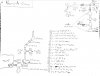
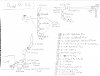
Here are my basic plumbing blueprints... if I can find some 2 for 1 parts I may change a couple minor things. Example being the transition from the 1" T's in the upper tank and the reducers to 3/4" which I know can be combined.

One unique thing I put in this design I've not done in the past is on the upper part of the tank. I have it set for an input ~1/2 way across the tank... I've always just had them at the end. This can possibly be cut out entirely as I don't feel it was needed on my 200gal... opinions welcome though.

If you see a major flaw feel free to shout and hopefully my drawings make sense!

Pump A - Lower cabinet on left, upper cabinet on right.
201707112327041000.jpg
Pump B - Lower cabinet on the left, upper cabinet on the right.
201707112327041001.jpg

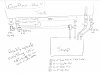
Overflows -
Assuming 2 primary, 1UV, and 1 emergency. All in a "straight pipe" herbie design.
201707112327041002.jpg
 
Last edited:
Ok, here are my constructive criticisms/concerns.
I may be wrong, but I think tuning 3 full siphon ( herbie style) drains in two separate overflows is going to be frustrating. I envision constant tweaking to get it quiet.
Based on previous concern of max flow I will assume your goal is running 3000-4000 gph. You will probably max out two full siphon 1" drains plus more at that rate of flow. If one of your 3 drains fails, your single open emergency drain may not be able to keep up unless it too can go full siphon. ( keep it low enough that it can't suck air before your tank overflows)

Im a little concerned about a UV on the drain side. It seems like a burnt out bulb and a cracked sleeve waiting for a place to happen. If you turn off both pumps for maintenance and forget to turn off the UV it will go dry. At the least you should flip the UV over so if it loses flow the bulb is still under water.
 
Ok, here are my constructive criticisms/concerns.
I may be wrong, but I think tuning 3 full siphon ( herbie style) drains in two separate overflows is going to be frustrating. I envision constant tweaking to get it quiet.
Based on previous concern of max flow I will assume your goal is running 3000-4000 gph. You will probably max out two full siphon 1" drains plus more at that rate of flow. If one of your 3 drains fails, your single open emergency drain may not be able to keep up unless it too can go full siphon. ( keep it low enough that it can't suck air before your tank overflows)

Im a little concerned about a UV on the drain side. It seems like a burnt out bulb and a cracked sleeve waiting for a place to happen. If you turn off both pumps for maintenance and forget to turn off the UV it will go dry. At the least you should flip the UV over so if it loses flow the bulb is still under water.

All great observations, there are a couple things to put your mind at ease for the moment. Drawing may not be... (cough) a talent of mine. I've also learned many of the mistakes you speak of so we're on the same page until you spot other errors (o:

That said the UV will be positioned exactly as you said but I had not thought of it for your reason. I've just had issues with air getting trapped over time if the openings are not face up. Knowing about the cracking issues is helpful. I don't often run it so I may opt to make it removable/replaceable.

To your second point, on a normal Marineland overflow I'd agree. I've had very good luck on these overflows modifying them to allow MUCH more flow. I think I can actually get away with running both pumps on full. I will also use the most direct pipe as the emergency to make sure it has the highest capacity.

That being said it may not matter as I've got DC pumps and plenty of gate valves to slow the flow. My big challenge is that I'm hoping to alternate the pumps on full and partial power. I'm skeptical I can achieve this with a herbie and if not oh well.

The trick I use on the emergency has prevented me from needing to fine tune the overflow gate valve more then once or twice a month. I simply cut the pipe to a half centimeter above the water line (in the overflow box) give or take. Then I tweak it to always allow a little water through. It's not enough to hear it but enough that the drain can fluctuate up or down without me noticing.
 
Last edited:
Slept on my design, found a couple seemingly obvious errors that I corrected... plumbing is displayed as coming in from the back corner but will be in the middle of the side.

Created my shopping list of parts, saw the price and quickly discovered which parts I can go without! Mainly reduced the number of valves considerably and a couple unions. Going to leave room to add back in a valve or two if necessary but I'll enjoy having a lower price tag by far and fewer places to potentially leak.

Now to wait for a sale somewhere.
 
Had a chance to look at your plan. I see what you mean with your drawing skills :) and I had some trouble following (sorry). How far are you sucking on the pump intakes? If it's more than the length of the valve, you could run in to possible cavitation issues with the flow you are trying to achieve. If that is the case, you may want to step up to 1 1/2" on the intake, otherwise it's fine.

If you opt in making your UV removable or replaceable like you mention, a good way is by using three valves and two tees -- a valve on each side of the UV, and one on a pipe that goes across between each end between the tees. That gives you the option of bypass and you don't have to shut anything down for UV maintenance. I have both of mine that way and it's great.

I see you plan on getting rid of some valves - you will still have a way to balance the flow after the tees, correct? Thought so. I'm going to pm you the place I buy my plumbing from. Maybe it will help you out.
 
Had a chance to look at your plan. I see what you mean with your drawing skills :) and I had some trouble following (sorry). How far are you sucking on the pump intakes? If it's more than the length of the valve, you could run in to possible cavitation issues with the flow you are trying to achieve. If that is the case, you may want to step up to 1 1/2" on the intake, otherwise it's fine.

If you opt in making your UV removable or replaceable like you mention, a good way is by using three valves and two tees -- a valve on each side of the UV, and one on a pipe that goes across between each end between the tees. That gives you the option of bypass and you don't have to shut anything down for UV maintenance. I have both of mine that way and it's great.

I see you plan on getting rid of some valves - you will still have a way to balance the flow after the tees, correct? Thought so. I'm going to pm you the place I buy my plumbing from. Maybe it will help you out.

The pump intake will be for the fitting only... I'd guess that would put me around 6"-1' between the bulkhead and actual pump.

I'll definitely have to consider that for the UV bypass but for now will wait until dry fitting everything to see where I end up on space.

The couplers being removed are in places unlikely ever to be removed but if so I'll have plenty of room to cut a pipe and place one in after as a patch.

The shutoff valves for now has been reduced to 5 critical pieces involving pump/UV removal and water changes.

The gate valves were reduced to 3 but may go as high as 6. I'm putting two on the 4 overflows. One after the UV and another on the highest flow overflow. The other two shouldn't need fine tuning simply because one is a wide open emergency and the other is the longest/slowest overflow return.

The last gate valve is after the shortest/fastest pump. This is to closely balance the amount of flow out of both pumps beyond the amount of adjusting the DC controller can do. Ideally allowing me to alternate max power between both pumps without messing up my herbie. I'm skeptical seamless pump alternating while using a herbie is achievable but I have to try. I did not put one on the individual outputs (unlike drawn). This was not a problem on my last tank and I changed what is pictured to have two balanced outputs T'd from the incoming pipe so they got the ax.

o==o==II==o==o
 
Last edited:
Brief update, I've always taken a lot of pride in building my own stands but does it still kinda count if I simply put the finished pieces together?

I'm cheating this time but Mr. Jlanger said he's up for the challenge of my "double mint" stand! The measurements and professional mockups were done in no time and has been a big help confirming what I was saying visually.

I'm throwing some challenges at him this time... double stand, double hood, removable tank panels, match the existing cabinets in materials/color/patterns, and oh yeah... it has to be flexible enough in design that I can install it regardless of measurement variables! Glad I'm not making it this time.

He said he's up for the challenge (o:
 
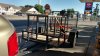
Christmas turned out to be a fat Santa who couldn't fit down the chimney! Owner of my office building isn't keen on me removing the door frame any longer.

I think the size of the stand intimidated him a bit so I'm working on a fix with a local welding shop... photos to follow once I consult the builder.
 

Users who are viewing this thread

Back
Top