Banner image

cypho's 36" DIY reef (1 Viewer)

The tank has been on cruise control since my last update. I have not done anything other than feed the fish and clean the glass occasionally. And things are going great! The acros are really growing quickly now!

Other than general health and good growth the only interesting thing to report is that there was a fight in the clam-family and the little one moved out.

One day I found the little guy had moved half way across the tank and up to the top of the rock pile. I have no idea how he managed to travel so far!

I put him back - only to find him someplace else the next day the next day. After about a week of playing this game I gave up and let him stay up in the rocks since he clearly was not doing to cooperate and hang out where I wanted him with the larger 2.


IMG_20170608_125632.jpg IMG_20170608_125625.jpg IMG_20170608_125614.jpg IMG_20170608_125451.jpg7a.gif IMG_20170608_131350.jpg IMG_20170608_131230.jpg IMG_20170608_125936.jpg IMG_20170608_131341.jpg IMG_20170608_131053.jpg IMG_20170608_130250.jpg
 
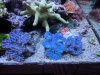
Tank is really coming along. Your Echinata is looking a lot more "Echinata"y
Sent from my Pixel using Tapatalk
 
A near disaster today with a Diver's Den order.

I was in the middle of changing the baby's diaper when the doorbell rang, so it took me about 3 minutes to get to the door.

Instead of a box of fish on the porch, I found a note saying they would be back on Monday (with a box full of dead fish)!

I immediately called LA and told them about the problem. They said they would look into it and I should be on the lookout for a phone call from UPS.

About an hour later I got a call from UPS saying they would be back in 10 minutes but instead of an apology, I got "you better be there this time" as if this was all somehow my fault.

A few minutes later the doorbell rings. I get to the door right away this time. The box is on the porch and the driver is sprinting back to his truck. I yell thank you and he angrily grunts back, hops in the truck, and floors it.

Unlike the last shipment, everything was healthy. But I have a feeling the UPS driver hates me now. l think the fish gods are trying to tell me to support the LFS.
 
The purpose of the order was to finally replace the pair of aurora gobies I lost in the QT tank crash. I waited so long because for some reason they cost 3x as much as when I purchased the original pair. I finally gave up on the price going back down and pulled the trigger.

That was a bit short of free shipping so I added a clam to the box too. I think I am becoming a clam horder. Is 4 clams too many?

IMG_20170609_155738.jpg IMG_20170609_172715.jpg
 
You do know that clams come in other colors than just blue, right?
Just kidding, the Blue Squamosa clams are my favorite.

Your delivery driver seems like he's in the wrong line of work. My delivery driver will actually stay at the door for a moment or two to wait for me and then discuss what's in the box. If I'm not immediately there and the weather is decent, she will leave the package tucked into the corner of the doorway with a note attached.
 
You do know that clams come in other colors than just blue, right?

Yes - I've seen lots of brown ones. I have enough brown coral, I don't need brown clams too. o_O

Actually - if you know where I could find one of these....
 
Wow - I pasted a link to facebook and that happened. That is a fun new forum feature.
 
I really like the turquoise T. crocea clams, but I haven't seen many of them popping up lately.
If I had better success with T. maxima, I would like a couple of the black and gold tiger/lightning varieties.

Ever since my tank was nuked with GFO fines, I haven't had the best luck with clams. I should try them in my upgraded nano; no GFO there!
 
I was out of town for 3 weeks in July. Due to a combination of factors the nitrates and phosphates jumped way up while I was gone and I returned to find the acros all browned out and hair algae everywhere. Interestingly the LPS, motiporas, and mushrooms have never looked better, they clearly enjoyed the higher nutrient levels. I fixed the source of the nutrient problems and now a few weeks later, 99% of the algae is gone and the acros are slowly coloring back up. The only real damage from my 3 weeks away was a bit of recession on some of the acros where they were being smothered by the hair algae.

On a more positive note, I think my red mandarins are spawning. I have not caught them in the act yet, but each evening the little female's belly is so swollen with eggs she looks like she is going to pop. I'm actually quite surprised how quickly they have recovered - both were skin-and-bones when I got them not that long ago.


0182b0dd66081e94cc077c3e52de5c1f.jpg
ef274f1ae5e4765cfdaae6c915975aa4.jpg
0422fc064cdd8275c6da6816e13f0f81.jpg
ee646345ebba74701aec3c13858f7c52.jpg
9e0af5243a6c7194c5ee86feb4e95c74.jpg
03881fbd3f0d707b4f12904d4228c598.jpg
cea3c6334bed64f72297554f1c19b09d.jpg


Sent from my Pixel using Tapatalk
 
Last edited:
That's bad err great news... I'm not sure how to react to this hahaha. We rarely see anyone post a problem and results of a recovery in the same post! So hats off to you good sir on a job well done.

Guessing you tearing up your tanks for me had something to do with it.

 
That's bad err great news... I'm not sure how to react to this hahaha. We rarely see anyone post a problem and results of a recovery in the same post! So hats off to you good sir on a job well done.

Guessing you tearing up your tanks for me had something to do with it.
It is easy to fix a problem when you the problems are so obvious..

Problem - I removed the filter sock before I left (because if it clogged while I was gone, I would not be able to change it and the sump would overflow)
Solution - Put the filter sock back in.

Problem - ATS clogged and was getting poor water flow. Part of the ATS light rusted out and stopped working.
Solution - Clean the ATS to fix the flow. Replace ATS light.

Problem - I told my wife to feed the fish every day while I was gone. And she did.
Solution - go back to feeding the feeding the fish 1-2x a week.

Then once I had the problems fixed, I just took a toothbrush to the rocks to remove the algae, and it did not grow back...
 
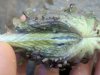
When cleaning the tank I noticed something odd. The newest clam (the one from LA/DD) finally released the rubble it was holding onto and I could get a good look at the shell. And guess what? it looks very different than all of my other squamosas. It looks much more like a maxima. How do you tell a maxima and a squamosa apart? Squamosa clams have a more symmetrical shell and a smaller byssal opening.

Here is the byssal openings of my 4 clams. Which one of these does not look like the others?

IMG_20170817_220142.jpg
IMG_20170817_220218.jpg
IMG_20170817_220259.jpg
IMG_20170817_220103~2.jpg


And there are shell profile pictures. Look at the distance from the hinge to the right/left edge. On Squamosa clams the two distances will be about the same. On Maxima clams one side will be noticeably longer than the other. And again, one clam stands out as clearly different than the others.

IMG_20170817_220132.jpg
IMG_20170817_220222.jpg
IMG_20170817_220252.jpg
IMG_20170817_220004.jpg

I'm curious what you all think. Is the new clam a Maxima? Or is LA right and it is a Squamosa? I guess there is a 3rd option and it is a hybrid of the two species.

I sent LA an email telling them that I think they misidentified the clam with the 2 shell pictures (pics 4 & 8 above) as evidence. They wrote back this morning denying that they misidentified the clam. I'm wondering if all of their the LA/DD "blue squamosa" clams are really just overpriced maxima clams.
 
Last edited:
To me, they all look like T. squamosa.
The dead give-away (for me) are defined and well-spaced scutes on the shell; which are typical of the T. squamosa. In T. maxima, the scutes are thinner and more tightly packed up the sides of the shell.
When looking at the byssal openings, T. squamosa, for the most part, have a tighter opening but as young clams, it can be variable.

What do the tentacles look like on the inhalant siphon?
T. maxima tends to have very fine and simple tentacles, while the T. squamosa has a more complex tentacle.
 
To me, they all look like T. squamosa.
The dead give-away (for me) are defined and well-spaced scutes on the shell; which are typical of the T. squamosa. In T. maxima, the scutes are thinner and more tightly packed up the sides of the shell.
When looking at the byssal openings, T. squamosa, for the most part, have a tighter opening but as young clams, it can be variable.

What do the tentacles look like on the inhalant siphon?
T. maxima tends to have very fine and simple tentacles, while the T. squamosa has a more complex tentacle.
I posted the same pictures on R2R and most people agreed with you that it looked like a squamosa. I am not totally convinced but I really I do hope you are all right.
 
Three times this year I have made a big mess refilling the 29 gallon kalk reservoir. I keep leaving the water running and overflow the reservoir spilling RO water on the floor. The good news is that this has no impact on the health of aquarium and RO water is the least bad thing I could spill on the floor.

But considering I only have to refill the reservoir once a month that is an absolutely terrible record. I am clearly not qualified to perform even the most basic maintenance tasks, which is why I strive to automate everything.

A solution presented itself at Chris's garage sale in the form of a big kalkwasser reactor.

With the reactor I can replace the large tank that must be manually refilled with a small container that is automatically refilled. I have not built the small container yet so for now I have just have it drawing RO water from the former kalk reservoir but soon my days of spilling RO water will be behind me.

I feel a bit bad that I purchased the reactor instead of building it from scratch. But don't worry - I have a fun DIY upgrade in the works that will keep this upgrade in line with the tank's theme.

I am going to install a conductivity probe into the reactor to monitor the strength of the kalkwasser. Then instead of just running the mixing pump on a timer, the mixing pump will kick on when the conductivity of the kalkwasser drops. And when the mixing does not push the conductivity back up, the controller will alert me that it is time to add more kalk powder to the reactor.

The reactor is pretty big - I'm hoping for 6+ months between refills, but as long as I get at least a month I won't be too disappointed.

I have ordered all of the parts I need for this project but I'm still waiting on the conductivity circuit from sparky's widgets to arrive before I can fully implement this plan.

38d4da405335f9f9928b679bcfbf8030.jpg
 
I have traditionally been very anti-waterchange. Mostly because they are a hassle and an opportunity for me to screw up and make things worse (see previous post - if it is possible to mess things up I will). But fully automating the waterchange process removes the downsides so I implemented an auto-water-change system a while back.

In addition to the improved water quality from all of the water changes, it has proven to do an amazing job of controlling the salinity. I don't know if it is just from the water changes improving the water quality or the more stable salinity helping out as well, but I have noticed a drastic improvement in the health of my coral. This has become my favorite bit of hardware so I'm going to dig into this deeper.

For hardware there are 4 main components.
  1. Conductivity sensor.
  2. Dosing pump to add new saltwater
  3. Dosing pump to remove tank water
  4. ATO that adds RO water when the sump waterlevel is low
Then the controller is programed to do four 0.25 gallon water changes each day.
  • When salinity is good (between 33 and 35 psu) it does a normal water change: add satwater, then remove tank water. (the order here is important, if you remove water first it will trigger the ATO)

  • If salinity is high, skip adding new saltwater, remove tankwater and then let the ATO top off with freshwater.

  • If salinity is low, it adds saltwater and skips the remove tankwater step. It also disables the ATO in case the low salinity is due to a leak - low water-level in sump is better than letting the ATO turn the aquarium into a freshwater tank.

  • Any time a "correction" is made, I am alerted so I can troubleshoot the issue. I'll probably ignore the first correction, but a series of corrections is a sign that something has gone wrong.

Considering how simple the logic is, it is surprisingly robust in it's ability to compensate for both equipment failure and any errors I might make.

  • I still have to mix the new saltwater about once a month, but if I make the water up too strong or too weak, it automatically compensates.

  • If I forget to refill the saltwater reservoir, it will stop doing the waterchanges as soon as the failure causes the salinity to go out of bounds.

  • If any equipment fails in the off position, it will stop doing the waterchanges as soon as the failure causes the salinity to go out of bounds.

  • If the dosing pumps loose calibration, it automatically compensates.

  • If the salinity probe loses calibration slowly, the shift in salinity will be equally slow. As long as I do a manual salinity check occasionally I will catch the problem long before it is an issue. And once recalibrated the system will slowly push the salinity back into range.

  • If the salinity probe loses calibration suddenly, it will still take a long time to push the salinity into the danger zone since the maximum correction is 0.25 gallons of water. I would have to ignore a long series of correction alerts before it became a problem.

The remaining failure possibilities are covered with bit of plumbing.
  • If the RO solenoid fails in the on position, a physical float valve will prevent it from adding too much fresh water.

  • If the saltwater pump fails in the on position, the biggest concern is flooding since adding too much saltwater at one time won't mess up the water chemistry. The sump has an overflow that is plumbed into the sewer so the excess water will just go down the drain.

  • And the tankwater intake is high in the sump, so it can only remove so much water if the tankwater pumps sticks in the on position.


This post needs a picture...
a8ca2e3e7f7cbe458206d6c80ec4d70e.jpg
 
Last edited:
Back in February my sump pump (Jebao DC-12000) died. Again. It was the 2nd Jebao DC- series pump to last less than a year so I was not thrilled with the idea of buying another. On top of that the DC- line had been long discontinued and was becoming hard to find. So I really needed to switch to a different pump.

Unfortunately the Jebao DC- series pumps are fairly unique. The stock DC- series controller sends a simple 5V digital signal to a motor driver inside the pump. That 5v digital signal is easy to recreate so my DIY controller essentially replaced the stock jebao controller. The newer Jebao pumps and just about every other controllable pump have the motor driver integrated into the stock controller, which makes replacing the stock controller very difficult - so difficult that after a lot of searching I could not find anyone who had successfully done it.

So with replacing the stock controller not an option, I would have to buy a pump designed to accept a 3rd party control signal. So I purchased a Reef Octopus Varios 8 pump and have been working since February to control it. Unfortunately pretty much all aquarium equipment that accepts a signal from a 3rd party controller wants a 10V analog signal. It is stupid to have two digital devices communicate via an analog signal but the world is stupid sometimes stupid.

7 months (and a lot of fried parts) later I have finally succeeded at producing a 10v analog signal that will control the Varios pump.
The precision and range of controllability is not as good as what I had with the old Jebao pumps, but it is working good enough. I am not sure the issues relate to a poor quality signal from my controller, or if that is just all Varios pump can do. But since my 10v signal is working acceptably on the only bit of 10v equipment I have, I am going to call this project a success for now.

The current design for my 10V analog module uses:

PICTURES
0447b6632248bd27ccc326251e232ca4.jpg
bea0c80668bba1dd1bf4516402f1dd8d.jpg
23e098bdce4f56da660e94bf725647d8.jpg
 
Last edited:

Users who are viewing this thread

Back
Top