Yes, In a previous tank I had a male Cypho, I posted a picture of him in front of a red lobo a page back. I've had many spawning pairs of dottybacks, but this is my first attempt with a Cypho.

Navigation
Install the app
How to install the app on iOS
Follow along with the video below to see how to install our site as a web app on your home screen.

Note: This feature currently requires accessing the site using the built-in Safari browser.
More options

You are using an out of date browser. It may not display this or other websites correctly.
You should upgrade or use an alternative browser.
You should upgrade or use an alternative browser.
cypho's 36" DIY reef (1 Viewer)
- Thread starter cypho
- Start date

jlanger
@thatfishcookieguy
Lifetime Member
Event Committee
Meeting Host 2020
Meeting Host 2021
Meeting Host 2022
Congrats on the dottybacks! They're gorgeous!
Pictus Blennies are a nervous fish. You can expect them to be cautious and looking stressed until they feel comfortable in the tank. My blenny is still terrified when I need to clean the glass inside the display; it will hide for hours refusing to come out.
And mine also took a long time before it started to eat prepared foods; a long time. I had plenty of algae in the display at the time so the blenny had more than enough to eat. It was after the algae was cleared up that I started to get anxious about what it was going to eat. Luckily for me, the fish loves the LRS Frenzy frozen foods.
Good luck!!!
No aggression from anyone towards pictus, but he does not look so great, he arrived with a thin belly. After 24 hours he is still not eating and is still breathing rapidly.
Pictus Blennies are a nervous fish. You can expect them to be cautious and looking stressed until they feel comfortable in the tank. My blenny is still terrified when I need to clean the glass inside the display; it will hide for hours refusing to come out.
And mine also took a long time before it started to eat prepared foods; a long time. I had plenty of algae in the display at the time so the blenny had more than enough to eat. It was after the algae was cleared up that I started to get anxious about what it was going to eat. Luckily for me, the fish loves the LRS Frenzy frozen foods.
Good luck!!!
It's been a long time since I posted an update. So here we go...
I've been way too busy this winter with work, but that does not mean I have not had time to work on the aquarium. I've done a lot.
First the good news
I managed to put an end to the rapid coral death issues I was having. The final theory is that it was some sort of contagious bacteria or virus. I decided to give up on some of the most beat up, but not entirely dead corals and pulled them from the tank. Each time I pulled a sick coral, there was a significant improvement of everyone else. After I removed the last sickly coral, the remaining corals even started growing! I ended up losing close to half of the coral that I had when the problem began, but at least it's over.
The Cypho dottybacks get along great...as well as could be expected. Every time the male sees the female he darts out, bites her midsection and then swims off to his den hoping she will follow and spawn with him. She does not appreciate this attention, but most of the time she escapes the incident unharmed. A few times I've woken up to find her torn to shreds but she has always recovered without any intervention on my part. I have not found any egg-balls yet, but he might just be good at hiding them.
The female mcculloch clown acts aggressive toward the male much less frequently, and they are starting to look pretty mature. I think it might not be too much longer until they start spawning.
The pair of tiger pistol shrimp have spawned a number of times and the smaller aurora goby frequently disappears into the cave for a few days. I'm wondering if it is guarding eggs or something.
Now for the bad news.
The pictus blenny disappeared into the rockwork shortly after my last post and never reappeared.
The smallest squamosa clam didn't make it. It never fully opened up, and it lost weight until there was nothing left. This loss was really painful because of the 3 clams this one had by far the best colour.
The Cypho dottybacks killed the two Swalesi basslets and when I tried to replace the basslets with a Pholidochromis cerasina dottyback, they didn't like him much better. Fortunately I was able to rescue pholidochromis by relocating him to the sump.
And then the more complicated news.
The tank reached it's 1 year anniversary. And that inspired me to do some cleaning/maintenance. And that turned out to be a problem. Everything was hardwired to my controller. As in literally soldered to it. I was not able to replace or even move anything without digging through a giant tangled mess of soldered together wires, and partially disassemble the controller. So in order to do any maintenance, I was going to have to build aquarium controller 2.0: with plugs.
With everything completely dependent on the controller 1.0, I didn't want to take it offline for days/weeks for a rebuild so I started over from scratch. I'll post more details about the controller rebuild later, but the short version is that I've made a lot of improvements in the design and functionality, but it took a few weeks to work out the kinks. The setbacks were never too time consuming to repair, but the breakdowns always seemed to always happen at night when I was asleep. Several mornings I woke up to find the tank cold because pumps weren't running or the heaters weren't running, or the heaters weren't turning off, or to find that it had pumped 2 cups of alk solution.
All of the instability has taken it's toll on the tank. Several colonies are receding a bit or just not looking that great. No controller malfunctions in the last 2 days. So fingers crossed that I have worked out all of the bugs. If so, I'm confident that a return to stability will turn things back around.
Finally, some pictures/videos.
Video of Blue urchin spawning.
https://goo.gl/photos/bpJKYrRdLGXc6DZy6
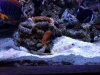
8 of 9 fish in 1 picture. Quite an achievement.
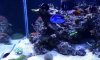
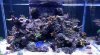
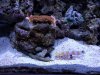
Full tank shot
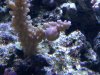
Weird coral tumor
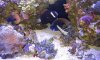
The male potter is still mostly blue. If he turns 100% blue, that would be really cool.
I've been way too busy this winter with work, but that does not mean I have not had time to work on the aquarium. I've done a lot.
First the good news
I managed to put an end to the rapid coral death issues I was having. The final theory is that it was some sort of contagious bacteria or virus. I decided to give up on some of the most beat up, but not entirely dead corals and pulled them from the tank. Each time I pulled a sick coral, there was a significant improvement of everyone else. After I removed the last sickly coral, the remaining corals even started growing! I ended up losing close to half of the coral that I had when the problem began, but at least it's over.
The Cypho dottybacks get along great...as well as could be expected. Every time the male sees the female he darts out, bites her midsection and then swims off to his den hoping she will follow and spawn with him. She does not appreciate this attention, but most of the time she escapes the incident unharmed. A few times I've woken up to find her torn to shreds but she has always recovered without any intervention on my part. I have not found any egg-balls yet, but he might just be good at hiding them.
The female mcculloch clown acts aggressive toward the male much less frequently, and they are starting to look pretty mature. I think it might not be too much longer until they start spawning.
The pair of tiger pistol shrimp have spawned a number of times and the smaller aurora goby frequently disappears into the cave for a few days. I'm wondering if it is guarding eggs or something.
Now for the bad news.
The pictus blenny disappeared into the rockwork shortly after my last post and never reappeared.
The smallest squamosa clam didn't make it. It never fully opened up, and it lost weight until there was nothing left. This loss was really painful because of the 3 clams this one had by far the best colour.
The Cypho dottybacks killed the two Swalesi basslets and when I tried to replace the basslets with a Pholidochromis cerasina dottyback, they didn't like him much better. Fortunately I was able to rescue pholidochromis by relocating him to the sump.
And then the more complicated news.
The tank reached it's 1 year anniversary. And that inspired me to do some cleaning/maintenance. And that turned out to be a problem. Everything was hardwired to my controller. As in literally soldered to it. I was not able to replace or even move anything without digging through a giant tangled mess of soldered together wires, and partially disassemble the controller. So in order to do any maintenance, I was going to have to build aquarium controller 2.0: with plugs.
With everything completely dependent on the controller 1.0, I didn't want to take it offline for days/weeks for a rebuild so I started over from scratch. I'll post more details about the controller rebuild later, but the short version is that I've made a lot of improvements in the design and functionality, but it took a few weeks to work out the kinks. The setbacks were never too time consuming to repair, but the breakdowns always seemed to always happen at night when I was asleep. Several mornings I woke up to find the tank cold because pumps weren't running or the heaters weren't running, or the heaters weren't turning off, or to find that it had pumped 2 cups of alk solution.
All of the instability has taken it's toll on the tank. Several colonies are receding a bit or just not looking that great. No controller malfunctions in the last 2 days. So fingers crossed that I have worked out all of the bugs. If so, I'm confident that a return to stability will turn things back around.
Finally, some pictures/videos.
Video of Blue urchin spawning.
https://goo.gl/photos/bpJKYrRdLGXc6DZy6
8 of 9 fish in 1 picture. Quite an achievement.
Full tank shot
Weird coral tumor
The male potter is still mostly blue. If he turns 100% blue, that would be really cool.
Last edited:
I'll post more details about the controller rebuild later
Part 1 of the controller rebuild.
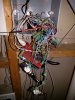
First, the motivation. In order to clean the sump pump I would have had to dig through this mess of wires. Not fun.
Then on to the good stuff, starting with the relay/outlet box. Almost nothing different here, I used the same outlets and the same relay boards. The only change is the addition of 2 RJ-45 jacks. Green brings in 8 on/off signals and white brings in 3.3v and 5v power. There are a few unused wires on the white line; I'd like to use them to add power consumption monitoring capabilities, but that is a project for another day. I plan to make some spare outlet boxes, so if I ever have problems with an outlet box, I can just swap the faulty box in a few seconds and then take my time repairing the old one.
Parts: 1 4-gang outlet box, 4 standard power outlets, 2 rj-45 keystones, 1 decora 4-keystone plate, and 1 8-channel relay board.
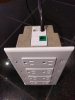
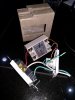
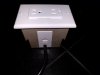
On my first controller, I burnt out several relays switching on/off the 500W heater too often. I overcame this in software, waiting until the temperature dropped 0.25F to turn on the heater instead of the moment the temperature sensor reported a drop. But for V2 I wanted the ability to control the temperature with the same precision as my ability to measure the temperature. So for V2 I created a relay/outlet box just for the heater. It uses a solid state relay that can switch up to 40 amps as frequently as 60 times per second. Totally overkill, but now I don't have the software limit the frequency of on/off cycles on the heater. Just a simple, if it's too cold, turn the heater on, otherwise turn it off. I should be able to hold a perfectly level temperature.
When SSR's fail, it is often stuck in the on position. 500W of heat can very quickly cook the tank, so the SSR box plugs into one of the mechanical relay outlets. When the temperature is more than 1 degree above the set point, I'll turn off the mechanical relay in case the SSR has failed (although most likely it is just the lights heating up the tank) and not return power to the SSR box until the temperature falls below the set point.
There is room for a 2nd SSR in the outlet box, and the box is wired with a 2nd control wire. But I can't think of any other devices I would want to switch that often and SSR's aren't so cheap that I purchased an extra just for the sake of filling up the box. So I'm waiting until I come up with a use for the 2nd SSR outlet before I install a 2nd SSR.
Parts: 1 1-gang outlet box, 1 standard power outlet, 1 rj-45 keystone, 1 decora 1-keystone plate, and 1 40A solid state relay.
Last edited:
Part 2.
To control more relays than the pi can on it's on, I use IO expander boards. I did not have any trouble with the expander boards in controller 1.0, but since easy maintenance and easy part replacement is one of the main goals of controller 2.0, I stuck an IO expander board in a box and added plugs so I can quickly swap it out if the need comes up. The IO expander boards I used on V1.0 have been discontinued, so I used a different chip, but functionally it does pretty much the same thing. The expander boards speak I2C which is a daisy-chainable signal, so I built the box has 2 input plugs (blue) - or rather 1 input, and 1 output that can be used to pass on the i2c signal to another i2c device.
Each IO control box can drive 16 outlets (2 8-outlet boxes). Just like the outlet boxes, the green RJ45 jack has the 8 control signals, and the white RJ45 jack has 3.3v and 5v power. I have built 2 of these and both are currently in use. I need to build at least one more to keep on hand for quick replacement.
I already burnt out one of these boards (totally my fault - I accidentally exposed it to 12V when the max it can handle is 5v) so making these modular has already paid off. It was easy to repair and put it back in service without having to take apart the whole controller.
Parts: 1 1-gang box, 6 rj45 keystone jacks, 1 6-keystone plate, 1 IO expander board.
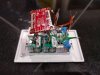
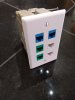
There is one big difference between these new IO expander boards and the ones I used before. These can do PWM. So in addition to turning on/off outlets, I can use the same part to control variable speed DC pumps, dim LED lights, and adjust the speed of DC fans.
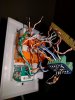
So analogous to the outlet/relay boxes, I built a box to break out 8 PWM outputs. This box is wired to work as a direct replacement for the relay boxes - each IO expander box can control 2 8-outlet relay boxes, 2 8-outlet PWM boxes, or 1 of each.
Most of the ideas I have for PWM control fit nicely into pairs, so to save space (and plugs) each plug carys 2 5v PWM signals. i.e. 1 plug controls 2 jebao wavemakers and another plug controls 2 jebao pumps.
Jebao pumps/wavemakers want a 5v pwm signal, but the IO expander board can only produce a 3.3v signal, so the PWM box has 2 4-channel level shifters to convert the 3.3v signals into 5.5v. Also, to make things a bit more fail-safe, I added pull up resistors to the two channels that I planned to use for sump pumps, so that the sump pumps are more likely to fail in the on position.
I have only built one of these so far, but I plan to build another to serve as a spare, and then may try building a 10v analog version that could control things that want a 10v analog signal (most commercial LED lights and non-jebao DC pumps want an old fashioned analog signal).
The IO board and the level shifters also work for input, so I could also use any of the channels in this box as an input for a float switch. I don't plan on using it this way but it's nice to have options.
Parts: 1 1-gang box, 6, rj45 keystone jacks, 1 6-keystone plate, 2 4-channel level shifters
(this picture was taken before I attached the 2nd level shifter board)
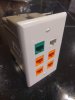
Before, I was controlling 2 jebao wavemakers, and 1 jebao DC pump, so I only needed 3 channels, but it was easy enough to find uses for the other 5 PWM channels in the PWM box I built.
I replaced the mag drive pump powering the ATS with a speedwave DC pump (identical to jebao). Since I have a flowmeter on the ATS, I can have the pump automatically increase the power when the ATS screen starts to get clogged with algae to maintain a constant flow rate.
To control Jebao pumps, I created a short cable that is placed between the stock jebao controller and the pump/wavemaker. The 5v signal from the pwm box is fed directly to the pump/wavemaker instead of the signal from the stock controller. If I ever want to return the pumps to operate independent from the controller, all I have to do is plug the pump directly into the stock controller again.
Parts: 4 3x0.75 SQMM LED Light Strips Waterproof 3 Pin LED Waterproof Connector Cable
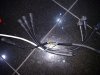
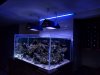
I added blue LED tape on the ceiling behind the tank to serve as a moonlight (both time and intensity synced in real time to the actual moon conditions at the location in hawaii I am syncing the lights and tide/wavemaker to).
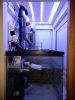
I added white and blue LED tape inside the stand, with each color on it's own dimmable channel. The in-stand lighting is both to help me see as well as possibly grow some low light corals in the sump. I can't think of any real reason to dim the in-stand lighting, or control the white and blue channels separately, but it only used $2 of parts and I already had the extra parts on hand.
I rewired the cooling fan for the stand to be variable speed instead of a simple on/off. Now I can run the fan slower (quieter) when the stand is not too hot or too humid.
To control the 12v LED tape and 12v fan, I just place an N-channel MOSFET between the 12v power supply and the thing I want to control. The 5v pwm signal from the PWM box switches the MOSFET on/off very frequently and that dims/slows the led/fan.
Parts: Blue LED tape, White LED tape, 12v Fan, 12v power supply, 4 N-channel MOSFETs, aluminum LED channel with diffusor (housing to make the moonlight pretty)
The LED tape is pretty bright. 3ft of tape is overkill for a moonlight, but I don't ever have to use it at 100%. I like the look of the light spanning the full length of the tank, so that's the way I built it. (obviously the tank lights are not normally on at the same time as the moonlight, but it is easier to photograph with the lights on)
Stand lighting. I'm not sure if this is bright enough for coral, but visually it seems pretty bright. I'll start with mushrooms or something super low-key and work my way up if that is a success.
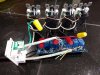
This picture is underexposed so you can see the led tape better. 4 strips of blue, 3 strips of cool white
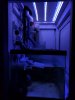
Also visible in these pictures is the ATS. It was not really part of the controller upgrade, but I made a few changes to the ATS this week. Originally the front panel of the enclosure was removable. But it warped and became really hard to remove/put on. And the warping also caused it to leak. So I replaced the removable panel with permanently glued in place front panel. I also finally glued the PVC in place instead of just dry-fit slip fittings that were only mostly water-tight. So hopefully there will be a lot less salt-creep on the plumbing going forward.
To control more relays than the pi can on it's on, I use IO expander boards. I did not have any trouble with the expander boards in controller 1.0, but since easy maintenance and easy part replacement is one of the main goals of controller 2.0, I stuck an IO expander board in a box and added plugs so I can quickly swap it out if the need comes up. The IO expander boards I used on V1.0 have been discontinued, so I used a different chip, but functionally it does pretty much the same thing. The expander boards speak I2C which is a daisy-chainable signal, so I built the box has 2 input plugs (blue) - or rather 1 input, and 1 output that can be used to pass on the i2c signal to another i2c device.
Each IO control box can drive 16 outlets (2 8-outlet boxes). Just like the outlet boxes, the green RJ45 jack has the 8 control signals, and the white RJ45 jack has 3.3v and 5v power. I have built 2 of these and both are currently in use. I need to build at least one more to keep on hand for quick replacement.
I already burnt out one of these boards (totally my fault - I accidentally exposed it to 12V when the max it can handle is 5v) so making these modular has already paid off. It was easy to repair and put it back in service without having to take apart the whole controller.
Parts: 1 1-gang box, 6 rj45 keystone jacks, 1 6-keystone plate, 1 IO expander board.
There is one big difference between these new IO expander boards and the ones I used before. These can do PWM. So in addition to turning on/off outlets, I can use the same part to control variable speed DC pumps, dim LED lights, and adjust the speed of DC fans.
So analogous to the outlet/relay boxes, I built a box to break out 8 PWM outputs. This box is wired to work as a direct replacement for the relay boxes - each IO expander box can control 2 8-outlet relay boxes, 2 8-outlet PWM boxes, or 1 of each.
Most of the ideas I have for PWM control fit nicely into pairs, so to save space (and plugs) each plug carys 2 5v PWM signals. i.e. 1 plug controls 2 jebao wavemakers and another plug controls 2 jebao pumps.
Jebao pumps/wavemakers want a 5v pwm signal, but the IO expander board can only produce a 3.3v signal, so the PWM box has 2 4-channel level shifters to convert the 3.3v signals into 5.5v. Also, to make things a bit more fail-safe, I added pull up resistors to the two channels that I planned to use for sump pumps, so that the sump pumps are more likely to fail in the on position.
I have only built one of these so far, but I plan to build another to serve as a spare, and then may try building a 10v analog version that could control things that want a 10v analog signal (most commercial LED lights and non-jebao DC pumps want an old fashioned analog signal).
The IO board and the level shifters also work for input, so I could also use any of the channels in this box as an input for a float switch. I don't plan on using it this way but it's nice to have options.
Parts: 1 1-gang box, 6, rj45 keystone jacks, 1 6-keystone plate, 2 4-channel level shifters
(this picture was taken before I attached the 2nd level shifter board)
Before, I was controlling 2 jebao wavemakers, and 1 jebao DC pump, so I only needed 3 channels, but it was easy enough to find uses for the other 5 PWM channels in the PWM box I built.
I replaced the mag drive pump powering the ATS with a speedwave DC pump (identical to jebao). Since I have a flowmeter on the ATS, I can have the pump automatically increase the power when the ATS screen starts to get clogged with algae to maintain a constant flow rate.
To control Jebao pumps, I created a short cable that is placed between the stock jebao controller and the pump/wavemaker. The 5v signal from the pwm box is fed directly to the pump/wavemaker instead of the signal from the stock controller. If I ever want to return the pumps to operate independent from the controller, all I have to do is plug the pump directly into the stock controller again.
Parts: 4 3x0.75 SQMM LED Light Strips Waterproof 3 Pin LED Waterproof Connector Cable
I added blue LED tape on the ceiling behind the tank to serve as a moonlight (both time and intensity synced in real time to the actual moon conditions at the location in hawaii I am syncing the lights and tide/wavemaker to).
I added white and blue LED tape inside the stand, with each color on it's own dimmable channel. The in-stand lighting is both to help me see as well as possibly grow some low light corals in the sump. I can't think of any real reason to dim the in-stand lighting, or control the white and blue channels separately, but it only used $2 of parts and I already had the extra parts on hand.
I rewired the cooling fan for the stand to be variable speed instead of a simple on/off. Now I can run the fan slower (quieter) when the stand is not too hot or too humid.
To control the 12v LED tape and 12v fan, I just place an N-channel MOSFET between the 12v power supply and the thing I want to control. The 5v pwm signal from the PWM box switches the MOSFET on/off very frequently and that dims/slows the led/fan.
Parts: Blue LED tape, White LED tape, 12v Fan, 12v power supply, 4 N-channel MOSFETs, aluminum LED channel with diffusor (housing to make the moonlight pretty)
The LED tape is pretty bright. 3ft of tape is overkill for a moonlight, but I don't ever have to use it at 100%. I like the look of the light spanning the full length of the tank, so that's the way I built it. (obviously the tank lights are not normally on at the same time as the moonlight, but it is easier to photograph with the lights on)
Stand lighting. I'm not sure if this is bright enough for coral, but visually it seems pretty bright. I'll start with mushrooms or something super low-key and work my way up if that is a success.
This picture is underexposed so you can see the led tape better. 4 strips of blue, 3 strips of cool white
Also visible in these pictures is the ATS. It was not really part of the controller upgrade, but I made a few changes to the ATS this week. Originally the front panel of the enclosure was removable. But it warped and became really hard to remove/put on. And the warping also caused it to leak. So I replaced the removable panel with permanently glued in place front panel. I also finally glued the PVC in place instead of just dry-fit slip fittings that were only mostly water-tight. So hopefully there will be a lot less salt-creep on the plumbing going forward.
Last edited:
Controller part 3
The brains behind the operation. A Raspberry pi 2b. This is an upgrade from the pi1b on controller 1.0. Kicking myself a bit because I ordered the pi2 just a few days before the pi3 was announced, but the pi1 was plenty powerful, I'm not missing out on anything from only having a pi2. I added a screw terminal plate on top of the PI to make it easier to work on/modify things down the road than a bunch of soldered connections, so it would only take me a few seconds to swap out a new pi if this one breaks or I feel a need to replace it with a newer model. I used the same clock module as before.
Parts: raspberry pi 2b, screw terminal plate, real time clock
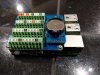
The main box.
The main box is covered with connectors. After all connectors was the theme of this project. The wiring is a slightly more organized than before, but because I broke out a lot more pins than before there is actually a lot more wire in there. If I have to mess with the wiring it will be just as bad as (or worse than) before. But every part should be easily replaceable without having to touch with the wiring. So the mess of wire scares me a lot less.
6 RJ-45 jacks - red(1 orange, i ran out of red) for 1-wire thermometer probes. 1-wire sensors are connected in parallel, so if I need more, it would be easy to create a 1-wire expansion box. But really, why would I need more than 6? I'm currently only using 4. tank, sump, stand, room
2 groups of 2 blue rj45 plugs for I2C. The pi has 2 I2c buses, I broke out both of them so I can use 2 i2c devices with the same address. Such as the humidity sensor I am using which has a fixed address. Before I could only have one of them (in the stand), now can have another to measure room humidity. Because i2c devices are wired in parallel, if I need more i2c jacks, i can easily build an i2c expander box. Or if I build boxes like my IO expander boxes, I can simply daisy-chain the i2c devices to include more than 4 i2c devices.
8 black rj45 plugs, each breaking out two IO pins from the PI. These will be used for float switches and flowmeters.
2 pH boards and one conductivity (salinity) board. (i'm not sure what I'll use the 2nd pH board for, but I had the part, so why not install it). the two pH boards are isolated by 1 i2c isolator, and the conductivity board is isolated by another. I don't think that I actually needed the isolation for the conductivity. I added it because I was having problems getting a good the conductivity reading, but eventually I decided that I just had bad conductivity board. When I replaced the bad board, it seems to work OK either with or without isolation. But since I had the part i went ahead and used it.
Parts: 1, plastic electrical box, lots of RJ45 keystones, 1 12-keystone plate, 2 6-keystone plates, 2 minipH boards, 1 minieC board, 2 isolation boards
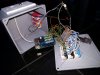
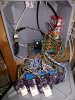
And here's the whole thing up and running.
In addition to the parts discussed in the previous posts. The controller is listening to 2 humidity sensors, 4 temperature probes, 1 flowmeter for RO topoff, 1 flowmeter for sumppump, 1 flowmeter for ATS, 4 float switches.
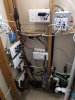
One other thing I changed, but you can't really see in the pictures is that I used a lot of 4-conductor telephone wire instead of 8-conductor cat-6 ethernet cable when I didn't need more than 4 conductors and when I was not transferring a lot of power. The telephone cable is a lot thinner and more flexible. It makes cable management a lot easier.
The brains behind the operation. A Raspberry pi 2b. This is an upgrade from the pi1b on controller 1.0. Kicking myself a bit because I ordered the pi2 just a few days before the pi3 was announced, but the pi1 was plenty powerful, I'm not missing out on anything from only having a pi2. I added a screw terminal plate on top of the PI to make it easier to work on/modify things down the road than a bunch of soldered connections, so it would only take me a few seconds to swap out a new pi if this one breaks or I feel a need to replace it with a newer model. I used the same clock module as before.
Parts: raspberry pi 2b, screw terminal plate, real time clock
The main box.
The main box is covered with connectors. After all connectors was the theme of this project. The wiring is a slightly more organized than before, but because I broke out a lot more pins than before there is actually a lot more wire in there. If I have to mess with the wiring it will be just as bad as (or worse than) before. But every part should be easily replaceable without having to touch with the wiring. So the mess of wire scares me a lot less.
6 RJ-45 jacks - red(1 orange, i ran out of red) for 1-wire thermometer probes. 1-wire sensors are connected in parallel, so if I need more, it would be easy to create a 1-wire expansion box. But really, why would I need more than 6? I'm currently only using 4. tank, sump, stand, room
2 groups of 2 blue rj45 plugs for I2C. The pi has 2 I2c buses, I broke out both of them so I can use 2 i2c devices with the same address. Such as the humidity sensor I am using which has a fixed address. Before I could only have one of them (in the stand), now can have another to measure room humidity. Because i2c devices are wired in parallel, if I need more i2c jacks, i can easily build an i2c expander box. Or if I build boxes like my IO expander boxes, I can simply daisy-chain the i2c devices to include more than 4 i2c devices.
8 black rj45 plugs, each breaking out two IO pins from the PI. These will be used for float switches and flowmeters.
2 pH boards and one conductivity (salinity) board. (i'm not sure what I'll use the 2nd pH board for, but I had the part, so why not install it). the two pH boards are isolated by 1 i2c isolator, and the conductivity board is isolated by another. I don't think that I actually needed the isolation for the conductivity. I added it because I was having problems getting a good the conductivity reading, but eventually I decided that I just had bad conductivity board. When I replaced the bad board, it seems to work OK either with or without isolation. But since I had the part i went ahead and used it.
Parts: 1, plastic electrical box, lots of RJ45 keystones, 1 12-keystone plate, 2 6-keystone plates, 2 minipH boards, 1 minieC board, 2 isolation boards
And here's the whole thing up and running.
In addition to the parts discussed in the previous posts. The controller is listening to 2 humidity sensors, 4 temperature probes, 1 flowmeter for RO topoff, 1 flowmeter for sumppump, 1 flowmeter for ATS, 4 float switches.
One other thing I changed, but you can't really see in the pictures is that I used a lot of 4-conductor telephone wire instead of 8-conductor cat-6 ethernet cable when I didn't need more than 4 conductors and when I was not transferring a lot of power. The telephone cable is a lot thinner and more flexible. It makes cable management a lot easier.
Last edited:
Yea for Potters pictures!
Inspired by the two starry blennies I just picked up at New Wave I broke out the good camera and took some better quality pictures today. I made sure to include some of the potters just for you marty.
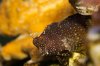
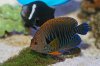
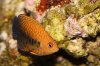
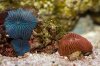
jlanger
@thatfishcookieguy
Lifetime Member
Event Committee
Meeting Host 2020
Meeting Host 2021
Meeting Host 2022
Cyphos, McCulloch's and Starries... You sure like fish with attitude!
The amount of blue coloration in your male Potter's is impressive.
If you're not already doing so, try feeding your tank some LRS Fertility Frenzy.
When I started adding that blend into my menu, the clownfish started spawning again; along with the Bangaii Cardinalfish. I ran out of that blend about a month ago, but just picked up another flat this past weekend and started feeding it again. Any activity out of the Auroras?
The amount of blue coloration in your male Potter's is impressive.
If you're not already doing so, try feeding your tank some LRS Fertility Frenzy.
When I started adding that blend into my menu, the clownfish started spawning again; along with the Bangaii Cardinalfish. I ran out of that blend about a month ago, but just picked up another flat this past weekend and started feeding it again. Any activity out of the Auroras?
Cyphos, McCulloch's and Starries... You sure like fish with attitude!
The amount of blue coloration in your male Potter's is impressive.
If you're not already doing so, try feeding your tank some LRS Fertility Frenzy.
When I started adding that blend into my menu, the clownfish started spawning again; along with the Bangaii Cardinalfish. I ran out of that blend about a month ago, but just picked up another flat this past weekend and started feeding it again. Any activity out of the Auroras?
We'll see how things go with the the two starrys - the big one definitely likes to harass the smaller one. I don't know if this is same-sex aggression or a somewhat violent mating ritual, but if anything it is the larger blenny that comes out of these scuffles looking more beat up. https://goo.gl/photos/8ChddBWwjdRxfJsZA
Once you add 1 mean fish, you are kinda forced into all mean fish - timid fish (like the pictus blenny and the swalesi basslets) just don't stand much of a chance. From that perspective the starrys are doing great. I saw the male cypho attempt to harass the smaller starry. Even though cypho is significantly larger, not only did the little guy hold his ground, he fought back and ended up chasing the cypho away.
Yes, I feed LRS Fertility a couple times a week. The first time I used it the male cypho nearly killed the female that night. I don't know if it was a coincidence or if it made him extra...fertile.
The clowns are starting to act more like a real pair, but I still think they are a bit too young. The female just lost the last hints of her 2nd stripe and the male is still shaped like a juvi (shaped sort of like a saddleback instead of like a tomato).
The two Auroras live in the same cave, and the larger one likes to rise up in the water column and stretch out his fins. I don't know if that's a mating thing or just something he likes to do. The smaller does disappear for days at a time which could be nest tending or something related to spawning, but i suspect when they spawn the eggs will be deep in the cave and the only way I'll ever know is if I happen spot the larvae when they hatch.
Last edited:
jlanger
@thatfishcookieguy
Lifetime Member
Event Committee
Meeting Host 2020
Meeting Host 2021
Meeting Host 2022
From what I can remember, the behavior of your goby you described is very common with the males as they want to be visible to the females.
Here's a link to the paper I found while researching the breeding behavior of gobies.
The paper doesn't have any fancy pictures as it's a science paper, but there's a lot of good information and data that was collected from a similar goby species.
http://www.wdc-jp.biz/pdf_store/isj/publication/pdf/28/284/28408.pdf
It's definitely a dry read, but the information is very helpful to those that want to learn more about natural fish behavior.
Check it out.
Here's a link to the paper I found while researching the breeding behavior of gobies.
The paper doesn't have any fancy pictures as it's a science paper, but there's a lot of good information and data that was collected from a similar goby species.
http://www.wdc-jp.biz/pdf_store/isj/publication/pdf/28/284/28408.pdf
It's definitely a dry read, but the information is very helpful to those that want to learn more about natural fish behavior.
Check it out.
Last edited:
I hung around the tank this evening and caught the angel's spawning - on film!
https://goo.gl/photos/4Wo7uYceFwjy8LXQ7
https://goo.gl/photos/4Wo7uYceFwjy8LXQ7
From what I can remember, the behavior of your goby you described is very common with the males as they want to be visible to the females.
Here's a link to the paper I found while researching the breeding behavior of gobies.
The paper doesn't have any fancy pictures as it's a science paper, but there's a lot of good information and data that was collected from a similar goby species.
http://www.wdc-jp.biz/pdf_store/isj/publication/pdf/28/284/28408.pdf
It's definitely a dry read, but the information is very helpful to those that want to learn more about natural fish behavior.
Check it out.
Thanks for the link. Here is a video of the larger goby showing off that I posted a while back: https://goo.gl/photos/PiAZ9TxSUmmNWhyR8
Last edited:
jlanger
@thatfishcookieguy
Lifetime Member
Event Committee
Meeting Host 2020
Meeting Host 2021
Meeting Host 2022
Any updates on the Potter's Angelfish spawning behavior?
And has that behavior stimulated any of the other fish to exhibit any breeding behavior?
Have the Starry Blennies settled in?
The dottybacks leaving them alone now?
And has that behavior stimulated any of the other fish to exhibit any breeding behavior?
Have the Starry Blennies settled in?
The dottybacks leaving them alone now?
Time for an update. And it's not the best news.
Fish:
A while back I added a yellow belly regal angel. Since they are known to be problematic eaters, he went directly into the sump (no quarantine) with lots of sponge covered live rock. Within 2 days he seemed to be doing great and eating like a pig so I moved him into the display tank.
The next morning he had a few spots of ich, and the day after that he was covered.
No one else was in the tank showed any symptoms. I suspect it may have been there all along and everyone else was just healthy and immune.
Even if everyone else was immune, I don't like the threat of ich always looming in the background, so I removed all of the fish for treatment and a fallow period.
I setup a 4x20 gallon rack to hold all of fish. At first I rotated all of the fish from one tank to the next every other day (bleaching and drying the tanks after each use). After a few weeks of that I declared the fish sterile built, built a sump out of acrylic, and added pump. For filtration, I'm just using a filter sock and some caulerpa floating in one of the tanks.
The regal angel did not make it (died well within the 2-week guarantee) and without a nice burrow for protection, the potter's angels picked the two aurora gobies to death during the tank-transfer stage of quarantine. Aside from that no other losses or signs of ich.
Coral:
In order to catch all of the fish, I ended up having to remove every last piece of rock from the tank and it took an hour or so. I lost one acro frag from the stress of being out of water for so long, but everything else exploded with growth after removing the fish.
I don't know if it was the lack of fish picking on the rock and eating the pods, less fish waste, or the tank has just finally hit it's stride. But coral growth over the last few months has been phenomenal. The live rock diversity has really improved as well.
Thanks have been going so well it's tempting to not put the fish back in.
Then last week happened.
I was out of town last week for the 4th of July. And as you all know we had a big storm. The power was out at my house for 2 days. If I had been home it would have been no big deal, but from 1000 miles away there was not much I could do.
My biggest fear was actually the fish. They were all packed in those mostly bare 20G tanks. And to make things worse the only pump was a 20 year old mag drive pump that often requires a good smack before it will get going each time you plug in in. would it come back on after the power was restored?
Well I'm back home and I am very happy to find that the pump was running and all of the fish are OK. But the coral did not fair so well. 5 or 6 frags had RTN'ed and a few more look like they might pop at any moment.
Fish:
A while back I added a yellow belly regal angel. Since they are known to be problematic eaters, he went directly into the sump (no quarantine) with lots of sponge covered live rock. Within 2 days he seemed to be doing great and eating like a pig so I moved him into the display tank.
The next morning he had a few spots of ich, and the day after that he was covered.
No one else was in the tank showed any symptoms. I suspect it may have been there all along and everyone else was just healthy and immune.
Even if everyone else was immune, I don't like the threat of ich always looming in the background, so I removed all of the fish for treatment and a fallow period.
I setup a 4x20 gallon rack to hold all of fish. At first I rotated all of the fish from one tank to the next every other day (bleaching and drying the tanks after each use). After a few weeks of that I declared the fish sterile built, built a sump out of acrylic, and added pump. For filtration, I'm just using a filter sock and some caulerpa floating in one of the tanks.
The regal angel did not make it (died well within the 2-week guarantee) and without a nice burrow for protection, the potter's angels picked the two aurora gobies to death during the tank-transfer stage of quarantine. Aside from that no other losses or signs of ich.
Coral:
In order to catch all of the fish, I ended up having to remove every last piece of rock from the tank and it took an hour or so. I lost one acro frag from the stress of being out of water for so long, but everything else exploded with growth after removing the fish.
I don't know if it was the lack of fish picking on the rock and eating the pods, less fish waste, or the tank has just finally hit it's stride. But coral growth over the last few months has been phenomenal. The live rock diversity has really improved as well.
Thanks have been going so well it's tempting to not put the fish back in.
Then last week happened.
I was out of town last week for the 4th of July. And as you all know we had a big storm. The power was out at my house for 2 days. If I had been home it would have been no big deal, but from 1000 miles away there was not much I could do.
My biggest fear was actually the fish. They were all packed in those mostly bare 20G tanks. And to make things worse the only pump was a 20 year old mag drive pump that often requires a good smack before it will get going each time you plug in in. would it come back on after the power was restored?
Well I'm back home and I am very happy to find that the pump was running and all of the fish are OK. But the coral did not fair so well. 5 or 6 frags had RTN'ed and a few more look like they might pop at any moment.
Last edited:
From the controller logs, it looks like it was probably the temperature swings that caused the most damage.
When the power came back on, the water temp had fallen to 72. The heaters pushed the temp back up to 80 very quickly and with the AC off (due to being out of town) by the next day the temp was up to 82.
82 would normally be fine - but a 10 degree jump in 1 day is not good.
Lesson learned - program the controller to be more gentle after a power failure causes the temperature to drop.
When the power came back on, the water temp had fallen to 72. The heaters pushed the temp back up to 80 very quickly and with the AC off (due to being out of town) by the next day the temp was up to 82.
82 would normally be fine - but a 10 degree jump in 1 day is not good.
Lesson learned - program the controller to be more gentle after a power failure causes the temperature to drop.
Last edited:

Sorry to hear the news but at least the fish are fine and you learned a (albeit expensive) lesson 
Well more bad news for my tank.
After keeping all of the fish out of my reef for 3 months, I re-introduced everyone. And even though everyone had been perfectly healthy the entire time in quarantine, within a week guess what. The Ich was back! So all the fish came back out and went back into quarantine for another 3 months. Arggg
Things were going fine in quarantine until about a month ago when I got busy with other things and had to let the fish go on cruise control for a while. When I finally got time to check in on the fish (and feed them) my female clown was not looking so great. Everyone else was fine, but she had some sort of bacterial infection.
I treated her (actually the whole quarantine system) with kanaplex for a week. No help. Then I tried maracyn for a few days. She started looking worse so I added MetroPlex into the mix last night.
And then this morning. Everyone was dead! I don't know if it was the MetroPlex, or the combination of things, or if the sick clown finally kicked the bucket took everyone else down with her. But whatever the cause, no more fish for me.
After keeping all of the fish out of my reef for 3 months, I re-introduced everyone. And even though everyone had been perfectly healthy the entire time in quarantine, within a week guess what. The Ich was back! So all the fish came back out and went back into quarantine for another 3 months. Arggg
Things were going fine in quarantine until about a month ago when I got busy with other things and had to let the fish go on cruise control for a while. When I finally got time to check in on the fish (and feed them) my female clown was not looking so great. Everyone else was fine, but she had some sort of bacterial infection.
I treated her (actually the whole quarantine system) with kanaplex for a week. No help. Then I tried maracyn for a few days. She started looking worse so I added MetroPlex into the mix last night.
And then this morning. Everyone was dead! I don't know if it was the MetroPlex, or the combination of things, or if the sick clown finally kicked the bucket took everyone else down with her. But whatever the cause, no more fish for me.
jlanger
@thatfishcookieguy
Lifetime Member
Event Committee
Meeting Host 2020
Meeting Host 2021
Meeting Host 2022
UGH!!!
So sorry to hear, William.
It would be interesting to know if the combination of medications caused all of the fish die. If the clownfish was the only fish exhibiting any maladies during the quarantine, it would raise suspicions that it had something to do with the last added treatment.
So sorry to hear, William.
It would be interesting to know if the combination of medications caused all of the fish die. If the clownfish was the only fish exhibiting any maladies during the quarantine, it would raise suspicions that it had something to do with the last added treatment.

Users who are viewing this thread
Total: 2 (members: 0, guests: 2)